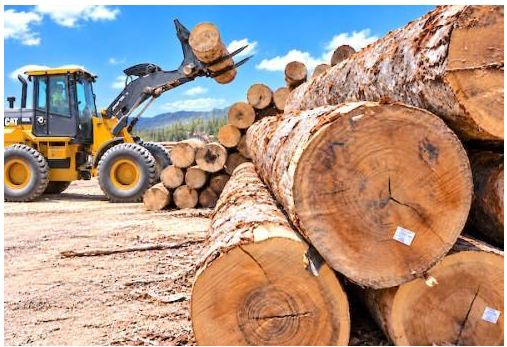
Cameroon plans to expand its ban on raw log exports beyond the
91 timber species already subject to restrictions, as the
government continues efforts to encourage domestic wood
processing. In his October 12, 2026, circular on preparation of
the 2027 state budget, President Paul Biya instructed the
government to maintain restrictions on unprocessed timber
exports through "an extension of the list of species prohibited
from export in log form."
The circular does not identify which additional timber species
will be affected, how many will be added or when the new
restrictions will take effect. The directive therefore sets out
the government's policy direction without establishing the scope
or timetable of the next round of export bans. The instruction
is not new. Similar provisions appeared in the presidential
circulars issued ahead of the 2025 and 2026 budgets. The latest
directive follows another round of tighter forestry regulations
earlier this year.
On April 28, 2026, Forestry and Wildlife Minister Jules Doret
Ndongo signed an order that added 15 timber species to the 76
already prohibited from export as raw logs. The decision raised
the total number of restricted species to 91. Another 23
species, classified as "promotion species," remain eligible for
export in unprocessed form, subject to an additional export tax.
A Regional Log Export Ban Scheduled for 2028
Cameroon's expansion of its restricted timber list forms part of
preparations for a broader ban on raw log exports across the
Central African Economic and Monetary Community (CEMAC).
On February 23, 2024, at a meeting in Bangui, CEMAC member
states and the Democratic Republic of Congo agreed in principle
to introduce the ban gradually, with January 1, 2028, set as the
implementation deadline. To prepare for that deadline, Cameroon
has combined regulatory restrictions with higher export taxes
designed to discourage shipments of unprocessed timber.
Between 2017 and 2024, the standard export duty on logs rose
from 17.5% to 75% of their free-on-board (FOB) value. FOB refers
to the value of goods at the point of export, before
international transportation and insurance costs.
The tax rate applicable when timber enters industrial free zones
is set at 60%. At the same time, the government continues to
offer customs exemptions on certain equipment used for more
advanced wood processing. These incentives are intended to
encourage forestry companies to process a larger share of their
timber in Cameroon before exporting it. The policy, however, has
implications for customs revenue. In its 2027–2029 economic and
budget planning document, the Ministry of Finance reported that
export duties collected on timber fell by CFA7.9 billion in
2025, a year-on-year decline of 21.3%.
The ministry attributed the decrease to the gradual increase in
taxes on raw log exports, a policy designed to encourage
domestic processing. The decline in customs revenue therefore
accompanies a deliberate effort to discourage raw timber exports
through higher taxation. The government's objective is to shift
more activity toward local processing, although the available
revenue figures do not establish how much additional processing
has resulted from the policy.
Exports of Both Logs and Sawn Timber Decline
Foreign trade statistics confirm a substantial reduction in
Cameroon's raw timber exports. According to provisional figures
from the National Institute of Statistics (INS), the country
exported 349,611 cubic meters of logs in 2025, compared with
475,401 cubic meters in 2024. That represents a 26.5% decline in
export volume. The value of log exports also fell, from CFA47.4
billion in 2024 to CFA39 billion in 2025.
The 2025 export volume was the lowest recorded since at least
2021, when Cameroon shipped 958,323 cubic meters of logs to
international markets. However, the decline was not limited to
unprocessed timber. Exports of primary processed wood products
also fell during the year. Cameroon exported 762,007 cubic
meters of sawn timber in 2025, down from 895,572 cubic meters in
2024, a decrease of 14.9%. The value of these shipments declined
by 12.5%, from CFA180.3 billion in 2024 to CFA157.7 billion in
2025.
Sawn timber therefore continues to account for a much larger
share of the sector's exports than raw logs, both in volume and
value. Yet the simultaneous decline in both categories makes it
difficult to determine whether lower raw log exports have
translated into greater domestic processing.
Although the government has tightened export restrictions and
raised taxes to encourage local transformation, the trade
figures alone do not demonstrate that more timber is being
processed within Cameroon. Both raw log shipments and exports of
sawn wood contracted in 2025.
Source:
businessincameroon.com


