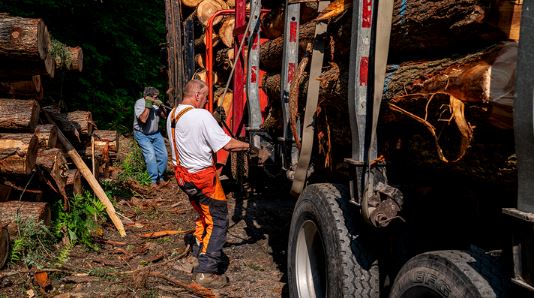
The American logging industry is facing severe financial
pressure due to surging diesel prices, according to Scott Dane,
Executive Director of the American Loggers Council, who spoke on
FOX Business' 'Varney & Co.' [1]. Dane highlighted that the
industry's heavy reliance on diesel fuel for trucks and
equipment has made the recent price increases particularly
damaging, with the cost to fill a logging truck now reaching
$1,350 [1]. He noted that fuel costs, which previously accounted
for 25% of operating expenses, have risen to 40-45%,
significantly eroding profitability within the timber sector
[1].
Dane emphasized that the situation is exacerbated by stagnant
prices for loggers, stating, 'We're getting paid no more today
than we were getting paid 10 years ago, roughly speaking,' which
limits the industry's ability to offset rising costs with
increased revenue [1]. He relayed urgent concerns from loggers,
including a recent message from Virginia describing the industry
as 'dying' due to unsustainable fuel expenses [1].
In response to the crisis, the American Loggers Council has
called on the administration to take immediate action, including
suspending the federal diesel fuel tax and halting diesel
exports under the Emergency Powers Act [1]. Dane argued that
these measures are necessary to address what he described as an
emergency threatening the 'complete collapse' of the timber
industry [1].
No specific market reactions or analyst opinions were mentioned
in the article, but the tone and data suggest significant
distress and potential industry-wide ramifications if diesel
prices remain elevated [1].
Conclusion
The U.S. timber industry is under acute financial strain due to
soaring diesel prices, with profitability eroded and no relief
from stagnant timber prices. Industry leaders are urgently
calling for government intervention to prevent a potential
collapse. The situation presents a high-impact risk to the
sector if fuel costs are not addressed.
Industry seeks emergency relief
The council wants the administration to
suspend the federal diesel tax and use emergency powers to halt
U.S. diesel exports. Dane argued that the country faces an
emergency and that domestic supply should take priority over
sending diesel abroad.
Those measures could provide short-term relief, but they would
also shift costs and potentially disrupt trade. A tax suspension
reduces government revenue, while an export halt could affect
refiners and overseas buyers without resolving the underlying
global shortage.
The broader risk is a slow supply-chain contraction rather than
a single dramatic shutdown. Each unprofitable route or parked
truck reduces the industry's capacity. If that process
continues, higher diesel prices will not remain a problem
confined to logging companies; they will surface in mill
utilization, material availability and the prices paid by
builders and consumers.
Source:
foxbusiness.com


