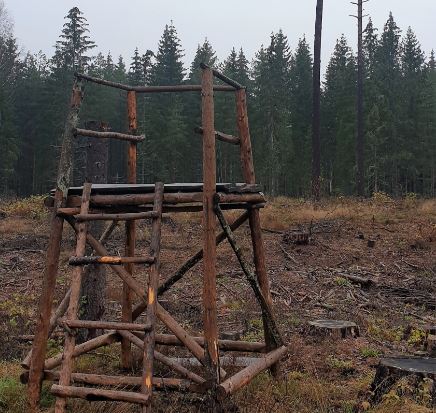
Ruokavirasto has imposed restrictions on forestry operations
and timber harvesting due to African swine fever (ASF) in
Virolahhti. Losses amounting to millions of euros are expected
in the infected area, which covers approximately 150,000
hectares. The restrictions may last for more than a year.
The Finnish Food Safety Authority Ruokavirasto has imposed broad
restrictions on logging in Virolahhti following the detection of
African swine fever (ASF) in dead wild boars. The ban applies to
mechanized tree felling, branch pruning, thinning, stacking, and
forest floor preparation.
For loggers, the situation is critical. Moving equipment outside
the infected zone does not solve the problem: logging operations
are based on long-term contracts, and contractors are already
engaged in other regions. Experience in Sweden shows that the
shutdown could last at least a year—until all wild boars in the
zone have been culled or the area is declared disease-free. ASF
was detected in Sweden in the fall of 2023, and restrictions
remained in place for over a year.
The infected zone covers approximately 150,000 hectares of
particularly timber-rich forests; losses are projected to run
into the millions of euros. According to Ruokavirasto’s
assessment, the restrictions could last up to a year.
Forest owners risk losing huge sums
"Everything depends on how long these restrictions remain in
force and how extensive they are," says Sami Oksa, Forestry
Director at the Finnish Forest Industries Federation (Metsäteollisuus
ry). According to the organisation's estimates, at least 700,000
cubic metres of roundwood were harvested annually in the
original zone, and forest owners risk losing approximately 26
million euros in income from stumpage fees. Federation data show
that this volume of timber would contribute nearly 106 million
euros to the Finnish economy. S. Oksa warns that employment
across the entire forest sector value chain could shrink by
nearly 900 jobs. As the south-eastern region of Finland already
imports a large portion of its wood from other regions of the
country, transport distances and, consequently, costs are
expected to rise.
"The situation is uncontrollable," emphasises Stefan Borgman,
Chairman of the Association of Forest Industry Experts (METO).
In mid-August, he estimated that the closed area reached 150,000
hectares – and that was even before the 28 August decision,
which added three municipalities to the list. Local forestry
organisations in the restriction zone have already begun
discussions regarding staff leave or even redundancies. The
association, citing recommendations provided by Ruokavirasto,
acknowledges that the restrictions could remain in place for at
least a year.
ASF is a hemorrhagic fever that affects domestic and wild pigs
as well as mini-pigs. The virus is not dangerous to humans, but
the economic consequences and implications for disease control
are significant.
The Metsäalan Asiantuntijat ry Meto trade union insists that
control measures should be implemented throughout Finland, not
just in the infected area. The organization is calling for a ban
on feeding wild boars (except for baiting for hunting) and for
the Finnish Food Authority (Ruokavirasto) to decide on a
preventive culling of the population nationwide.
Source:
zemeunvalsts.lv


