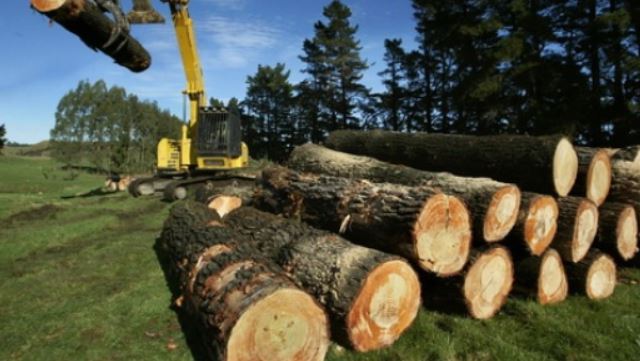
The trough that barely dipped
After three brutal years, New Zealand’s export log market is
finally showing signs of life. The 2026 price trough has landed
at just 5% below the 12-month average, according to Marcus
Musson, chief operating officer at Stand Forestry, writing in
the NZ Herald. That is the shallowest correction in four years,
compared with 8% in 2025, 10% in 2024 and a punishing 25% in
2023.
At-wharf-gate prices for A-grade short logs have recovered into
the early NZ$120s per JAS by July, bouncing back from a June dip
Musson attributes to the ‘Trump effect’ – a mix of war-related
freight costs, foreign exchange pressure and softer buyer
sentiment that knocked spot prices by around NZ$8/JAS. The PF
Olsen Log Price Index confirmed the June dip, dropping NZ$3 to
NZ$119, still level with the five-year average.
Three headwinds have all turned
What makes Q3 look like a genuine inflection point is that the
three factors behind the June correction have reversed at once.
Freight costs are expected to fall from the mid-US$40s to the
high US$30s per unit later in July. The kiwi dollar has slid to
a seven-month low in the mid-US$0.56 range, sharpening export
competitiveness. And CFR prices in China have started edging
higher.
The sharp deterioration that many feared at the end of the
second quarter has failed to materialise, with export returns
stabilising, shipping costs easing and seasonal Asian demand
showing early signs of recovery. Timber Industry News reported
the same week that port inventories have held steady and daily
consumption is recovering as the rainy season subsides.
Everything rides on Chinese cranes
Here is the uncomfortable reality. The recovery case hinges
almost entirely on China’s construction season firing up.
Chinese daily log consumption sits in the early-to-mid 50,000
cubic metre range, and Musson expects it to push through 60,000
cubic metres a day by late August. Port inventories at around
2.5 million cubic metres are manageable, not a glut.
The dependence is structural. MPI data for 2025 shows NZ
forestry exports worth NZ$6.28 billion, with 55% going to China
and logs and poles alone worth NZ$3.4 billion. Allan Laurie of
Laurie Forestry, in his June report, notes NZ is the largest
supplier of softwood logs to China, ‘currently hovering around
70-80% of all supplies.’ He is blunt about who holds the pricing
pen: ‘There is no grand plan in China to gear prices for NZ
logs. If we should shorten supply, prices will lift, but only in
so much as China domestic pricing will allow.’
The supply story is the real prize
The more durable tailwind is supply. Large-scale storm windthrow
in the upper South Island and lower North Island flooded the
market with price-insensitive salvage timber that hit wharves
regardless of conditions. But those forests cannot be harvested
again for decades. The lower North Island salvage is now mostly
complete, and the pattern has already played out around Taupo,
where harvest levels fell sharply after the post-Gabrielle
salvage wound down. Forests harvested today because of storm
damage cannot be harvested again tomorrow. With no large-scale
alternative harvest opportunities elsewhere, NZ’s total log
supply is set to decrease incrementally, tightening the market.
India and a domestic bright spot
Diversification is finally showing teeth. Around 12 vessels are
planned from NZ to India in July, with India’s CFR prices in the
late US$160s per cubic metre against US$124 in China, netting
better returns despite higher freight. Closer to home,
residential building consents rose 19% in the year to May,
ending three years of decline and lifting domestic timber
demand.
Less bad money, not good money
The official view stays cautious. MPI’s June Situation and
Outlook forecasts forestry export revenue easing 1% to NZ$6.1
billion this year, with a further 2% drop in 2026-27. As Musson
dryly puts it, returns are ‘more predictable, not more
palatable.’ For logging contractors, transport operators, port
workers and rural lenders across Tasman, Marlborough, Hawke’s
Bay and Gisborne, a sustained lift would be felt fast. The
sector is making less bad money, and Q3 could be the turn –
provided, as Musson notes, ‘Trump doesn’t have another military
brainwave.’
Source:
b2bnews.co.nz


