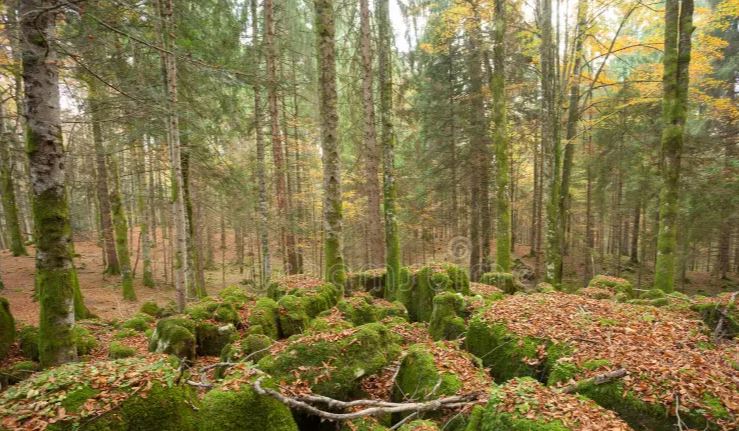
According to EOS data, forest cover has increased by 45 per
cent since 1990, but in 2024 Italia imported the majority of its
processed timber
The good news is that European forests continue to grow:
according to the 2025–2026 Annual Report of the European
Organisation of the Sawmill Industry (EOS), a body representing
around 80 per cent of European sawn timber production, European
forests now cover over 232 million hectares, equivalent to 35.4
per cent of the continent’s land area, and over the last 35
years they have expanded by more than 23 million hectares, with
an average increase of around 665,000 hectares each year. At the
same time, Europe’s forest stock has reached 38.3 billion cubic
metres, an increase of around 45 per cent compared with 1990.
Yet – and this is the less positive news – the availability of
raw materials for the timber industry remains one of the main
challenges to the sector’s competitiveness and to Europe’s
sustainability objectives, as emerged from the Forestry-Timber
General Assembly organised in Bologna by Filiera Legno (an
association representing almost 600 companies in the timber
industry), which brought together institutions, public
decision-makers, representatives from the forestry sector,
businesses, professionals, designers, universities and research
centres.
In 2020, the forestry and timber sector generated over 113
billion euros in added value and employed around 2.4 million
people across forestry, primary processing and related
industries.
The Italian Paradox
Whilst this is the picture at European level, Italia has its own
distinct characteristics: despite having a forest area that is
constantly growing and one of the largest forest resources in
Europe, our country continues to rely heavily on imports of
timber raw materials. In 2024, approximately 1.47 million cubic
metres of roundwood were imported, whilst domestic consumption
of sawn coniferous timber remained at around 5.45 million cubic
metres.
Alongside this dependence on imports, however, there are
encouraging signs: domestic production of coniferous sawn timber
has returned to growth and now stands at nearly one million
cubic metres, confirming the strategic role of Italian sawmills
in making the most of the country’s forest resources.
Positive signs are also emerging from the broadleaf timber
sector, where production is forecast to stand at around 340,000
cubic metres in 2025. This figure reflects the growing interest
in making the most of national forest resources and, in
particular, the supply chains linked to the chestnut, a species
that has historically been central to the economy of Italy’s
mountainous and hilly regions. This trend highlights the
untapped potential of the Italian supply chain.
A strategic raw material
From sawmills to packaging, from construction to fit-outs,
right through to numerous industrial and professional
applications, timber is a strategic raw material for thousands
of Italian businesses. The packaging sector alone handles around
160 million pallets every year, whilst domestic production
exceeds 84 million units, confirming the central role of timber
in the country’s logistics and real economy.
Wood construction also remains one of the main areas of growth
in demand, with a turnover of over 2.3 billion euros, according
to data from the Federazione Filiera Legno’s 2025 Wood
Construction Observatory.
In addition to their energy and environmental performance,
timber buildings play a strategic role as genuine carbon sinks.
At the same time, the growth of off-site construction is driving
the sector’s evolution towards more industrialised, efficient
and innovative production models, capable of reducing
construction times, resource consumption and the environmental
impact of building sites.
Making the most of the entire life cycle
“The EOS data show that the challenge is not just about forests
or individual companies, but about the country’s ability to
develop an industrial policy that makes the most of our raw
material throughout its entire life cycle,” said Angelo Luigi
Marchetti, president of the Federazione Filiera Legno. “Raw
material availability, sustainable forest management, industrial
innovation, timber construction, logistics, packaging and
manufacturing are all elements of a single, interconnected
production ecosystem that must engage with other national supply
chains. Italia possesses expertise, companies and know-how of
the highest calibre, but we need to strengthen our ability to
work as a cohesive system and build a shared vision for the
future of the sector,” concluded Marchetti.
Source:
ilsole24ore.com


