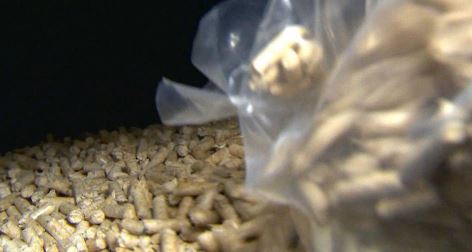
Heating with wood pellets has become significantly more
expensive. In January, customers had to pay up to 28 percent
more for loose pellets than they did six months ago. In Upper
Austria, consumers have to dig deepest into their pockets after
Tyrol and Vorarlberg.
While gas, oil, and electricity have recently become cheaper,
pellet heating users are now paying just under $400 per ton in
January instead of around $308. That is up to 28 percent more
than six months ago.
According to the industry association ProPellets, there
continues to be a clear west-east divide across Austria: heating
with pellets is most expensive in Tyrol and Vorarlberg, closely
followed by Upper Austria and Salzburg. Pellet prices are
currently cheapest in Burgenland.
Geopolitical situation as a reason for high prices
The industry cites the tense geopolitical situation as the main
reason for rising prices, with the war in Ukraine playing a
significant role, among other factors.
There was an exceptional situation in 2025 with regard to the
seasonal development of pellet prices: in previous years, the
cheapest prices were usually found in the spring. Prices in
April and May were on average five to ten percent below the
level of the fall and winter months. “Due to the geopolitical
situation, there was no stockpiling in 2022 – the usual seasonal
price structure did not materialize,” writes ProPellets.
Heating oil industry sees itself as a price stabilizer
On Wednesday, the industry association Energie.Wärme.Österreich
emphasized that heating oil prices are stable despite high
demand, while buyer interest has driven up pellet prices.
“Within the energy component of the consumer price index (CPI),
heating oil proved to be a stabilizing factor in 2025,” said
Managing Director Martin Reichard.
Source:
ooe.orf.at


