IKEA made its historic debut at the Consumer Electronics Show (CES)
2026 in Las Vegas, presenting an impressive lineup of affordable
smart home devices. This first appearance by the Swedish
furniture giant at the world's largest technology exhibition
became a significant event, demonstrating the company's serious
intentions in the smart home technology segment.
Instead of chasing impressive concepts or artificial
intelligence integration that dominated the show from
competitors like Samsung, LG, and Bosch, IKEA focused on what it
does best: creating thoughtful, affordable products that
naturally fit into everyday life. The company unveiled 21
Matter-compatible devices, emphasizing ease of use and
democratization of smart home technologies.
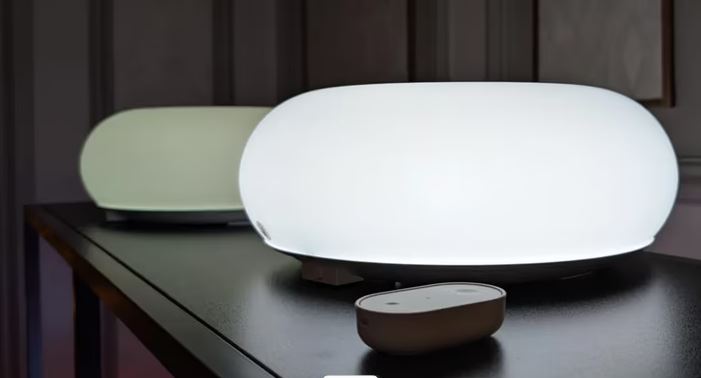
The centerpiece of IKEA's presentation was the smart version of
the legendary Varmblixt lamp — a characteristic donut-shaped
product that became a viral hit since its launch in 2022.
Created in collaboration with Dutch artist and designer Sabine
Marcelis, the original Varmblixt lamp quickly sold out and
became one of IKEA's most popular products. Company
representatives reported that on average, approximately one
Varmblixt lamp is sold every five minutes in the US, underlining
its incredible popularity.
The new smart version of Varmblixt maintains the iconic donut
shape but is now equipped with color-changing and dimming
functions. The lamp received a matte white glass coating that
changes color from within when switching between 12 preset
shades. Control is performed using the new Bilresa remote
control from IKEA's new smart home device lineup.
A feature of the lamp is the smooth transition between colors.
According to Sabine Marcelis: "We spent a lot of time
fine-tuning the transitions between the curated colors. What
makes this lamp unique is that switching between colors is not a
sudden change, but a very smooth journey." This feature creates
atmospheric lighting that changes naturally, rather than in
abrupt jumps.
For users preferring more granular control, the IKEA Home Smart
app allows selection from a wider range of 40 shades, mixing and
matching them to obtain full color spectrum options. This means
users are no longer limited to the seventies-inspired orange
glow characteristic of the regular lamp and can unlock a huge
range of aesthetic options.
The smart Varmblixt lamp will be available in both wall-mounted
and table versions priced at $99.99 in the US with corresponding
regional pricing. Sales will begin in April 2026. In addition to
the table and wall donut, IKEA also presented a smart version of
the pendant lamp from the Varmblixt collection, characterized by
a cluster of curved tubes that focuses on the nuances of white
light and glows with a spectrum of hues from cool white to
candle-like yellow.
Beyond the iconic Varmblixt lamp, IKEA introduced an expansion
of its affordable Kajplats smart bulb lineup. The company
announced a new smart bulb costing just $6 that supports
Matter-over-Thread and works with Apple Home, Google Home, and
Samsung SmartThings. Also introduced is a more premium globe
bulb for $15 that looks attractive and modern — a long-awaited
answer to the request for more aesthetic but affordable smart
bulbs.
One of the most interesting new devices was the Bilresa remote
control. It's a smooth, riverstone-like object available in two
variants: with two simple buttons or with a button and a scroll
wheel. The device feels pleasant to hold and use, equipped with
a magnetic mount so as not to lose it. The buttons and scroll
wheel provide tactile and pleasant interaction — clicking,
scrolling, adjusting — instead of being trapped in an app.
IKEA also presented a complete lineup of Matter-enabled smart
devices, including smart plugs for $8, various sensors for the
home. All these devices are designed with IKEA's signature
aesthetic — rounded forms, playful names, and prices that make
experimenting with smart technology low-risk. Critically
important, there were no demonstrations or unrealistic concepts
— this was a more practical debut, oriented toward smart home
technology for people who want their homes to work better
without becoming smart home experts in the process.
All IKEA Matter-enabled devices work with the company's DIRIGERA
hub, but thanks to Matter's interoperability principles, users
can also use any Matter-compatible hub they already own. During
the CES demonstration, even in the notoriously congested
exhibition network conditions, devices responded quickly.
Pressing a button changed lighting, turning a dial changed
brightness — everything worked smoothly and responsively.
However, there's one small caveat: Google Home support for some
generic Matter controls is still evolving. Devices connect, but
Google doesn't always know how to interpret every button press.
This is more a platform limitation than a hardware problem, and
everything still works smoothly inside IKEA's own app and other
ecosystems like Apple Home and Samsung SmartThings.
In the audio area, IKEA introduced the compact Kallsup Bluetooth
speaker costing just $10, which will go on sale in April 2026.
The cube-shaped battery-powered speaker is available in three
colors, supports Bluetooth 5.3, and provides up to 20 hours of
battery life. A feature is the ability to link up to 100
speakers together to create a chain, although this is done
through a direct wireless connection rather than standards like
Auracast.
While this limits IKEA product compatibility with other brands,
the advantage is that the connection becomes seamless.
Connecting speakers to each other takes just a few seconds.
Sound quality is not impressive, but for a $10 speaker it's
quite good — sufficient for background music or podcasts.
In addition to budget options, IKEA showcased a new line of
premium audio devices from the Teklan collection, created in
collaboration with designer and photographer Tekla Evelina
Severin. The collection, first announced in November 2025,
includes circular Bluetooth speakers in color-saturated patterns
and solid variants ranging from 8 to 18 inches.
Particularly highlighted are two new mushroom-shaped Kulglass
speaker lamps with glass shades inspired by soft-serve ice
cream. These devices went on sale on January 1, 2026, and are
equipped with the convenient Spotify Tap function. Also
available is the portable Solskydd Bluetooth speaker, which can
be mounted on a stand or attached to a wall.
IKEA's CES 2026 debut received wide recognition from the
industry and exhibition visitors. IKEA's meeting room inside the
Venetian hotel, though modest in size (about a regular living
room), was filled with interested visitors wanting to see what
Swedish designers brought to the exhibition. A bowl of BELÖNING
chocolate bars helped cope with the crowding while guests
explored the new smart home lineup.
Experts noted that IKEA's approach contrasts with typical smart
home offerings that can often be powerful and impressive but not
always approachable. The typical mix of apps, bridges, and
compatibility caveats can make users feel more like tech support
than homeowners. IKEA worked on solving this problem by showing
how complex systems can be simplified into products most people
actually want in their homes, at prices they can afford.
The main takeaway from IKEA's first year at CES is that nothing
screamed for attention with loud statements. Instead, there was
confident, consistent work toward smart homes that feel less
like tech demos and more like actual living spaces. CES 2026 key
announcements from IKEA showed that the company wasn't trying to
reinvent the smart home but was trying to make it more livable,
affordable, and tactile.
All new smart home devices from IKEA started appearing in the
company's stores and on its website in January 2026, with some
products like the Varmblixt lamp and Kallsup speaker scheduled
for release in April. IKEA global range manager David Granath
believes the Varmblixt lamp originally took the internet by
storm because it's a "genuine design item" at an affordable
price, and the smart version should continue this success.
Source:
abit.ee


