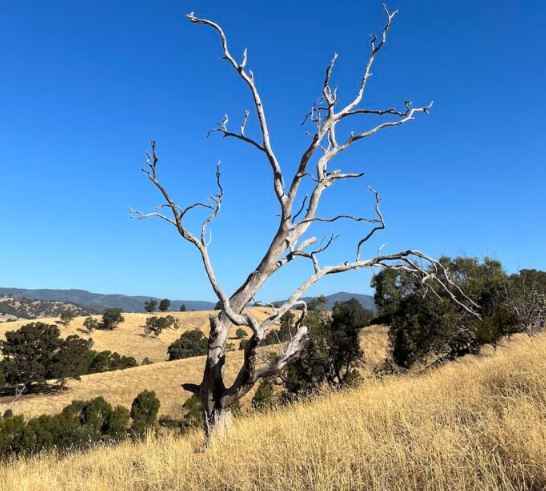
Trees across Australia’s forests are dying at increasing rates,
with new research pointing to a long-term shift in forest health
linked closely to a warming and drying climate.
The study, led by Western Sydney University and published in
Nature Plants, analysed 83 years of data from more than 2,700
forest plots nationwide. It brings together records from
tropical rainforests, savannas and temperate eucalypt forests to
track background tree mortality, meaning tree deaths not caused
by fire, clearing or logging.
The findings show that background mortality has risen steadily
since the 1940s and that this pattern appears across all major
forest types. Over the same period, tree growth has either
stalled or slowed, suggesting the rise in deaths is not part of
a natural cycle of renewal but reflects an imbalance between how
fast trees grow and how quickly they are lost.
Researchers found that the trend closely follows Australia’s
changing climate. Rising temperatures were identified as the
dominant factor, with mortality increasing fastest in hotter,
drier regions. Dense forests were also more vulnerable, as
competition for water and light adds to environmental stress.
Professor Belinda Medlyn from the University’s Hawkesbury
Institute for the Environment said the results point to mounting
pressure on forest ecosystems.
“Australians rely on their forests for a wide range of ecosystem
services, from cultural values and recreation to timber for
houses. Increasing tree mortality in our unique forests will
affect all of these. A particular worry is that the forests’
ability to store carbon will decline. This has significant
implications for Australia’s net carbon balance,” she said.
------
Source:
theindiansun.com.au


