While timber prices have shown signs of decline in 2025,
Arkansas’ forestry sector continues to demonstrate resilience,
innovation and economic significance across the state and the
broader southeastern United States.
A recent analysis by the Arkansas Center for Forest Business
determined that the southeastern U.S. directly contributes $74
billion and $173 billion indirectly to the national economy from
forestry and forest-product sectors. This accounts for 40.5% of
the nation’s total forestry economic impact. The pulp and paper
industry continues as the region’s largest forestry segment,
adding $33.6 billion directly to regional gross domestic
product, underscoring forestry’s broad economic significance.
Research Highlights: Supply, Mills and Resilience
Recent research on Regional Drivers of Primary Wood Processing
Mills in the Western Southeast United States from the University
of Arkansas at Monticello helps explain what the timber industry
experienced in 2025. The study shows that where wood-processing
mills operate largely comes down to straightforward issues like
having nearby timber, reliable transportation, and local
infrastructure. Pine mills continue to lead the region because
pine remains the most widely available resource in Arkansas and
the surrounding states.
This research also reflects a reality seen over the past decade,
including 2025. There are fewer operating mills than in years
past as the industry adjusts to changing markets and costs.
Areas with a consistent timber supply and available workforce
remain best positioned to support mills, while shifts in the
economy, transportation expenses and policy decisions continue
to shape how and where the industry grows.
Concerns for forest health
Since the early 20th century, forests have been partially
harvested as they grow, with smaller and weaker trees removed
for papermaking. This harvesting pattern leaves more light,
water and nutrients for remaining trees and fosters more lush
underbrush to support wildlife. With paper markets in decline,
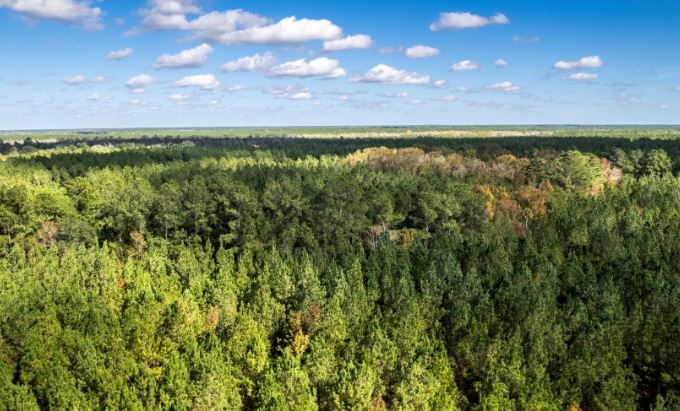
forests are getting more densely stocked with trees. This trend
is a growing concern among forestry experts, as overcrowded
forests are more vulnerable to health problems.
“Arkansas’ forests are overweight and becoming more obese every
year,” said Matthew Pelkki, UAM forest economics professor and
director of the Arkansas Center for Forest Business. “Our
forests are becoming unhealthy. Forests don’t have heart
attacks, but when overcrowded, they become more susceptible to
insect infestations, diseases outbreaks and wildfires that can
threaten the landscape and people’s lives.”
This trend reinforces the importance of active, sustainable
forest management that supports both healthy forests and a
strong forestry industry.
Innovation and new market pathways
Experts at UAM and with the Arkansas Forest Business Center are
actively exploring new market opportunities to utilize the
state’s abundant small-diameter pine. Potential markets include
wood shavings and biochar for use in the poultry industry, as
well as mass timber products for construction and infrastructure
projects.
These initiatives focus on creating a supply chain for materials
that have historically had limited markets. They also offer new
economic opportunities for rural communities while supporting
overall forest health.
“We’re looking at forest management approaches that foster
development of trees marketable for higher-value products such
as sawtimber without the need to partially harvest the forest to
optimize health,” said Michael Blazier, dean of the UAM College
of Forestry, Agriculture, and Natural Resources. “These
management systems include planting strategies with fewer trees,
pruning to foster log quality in wider spacings and grazing
cattle under low-density tree overstory. Our faculty are also
exploring management approaches that can reduce overstocked
forests in areas without paper markets at optimal cost.”
------
------
------
Source:
arkadelphian.com


