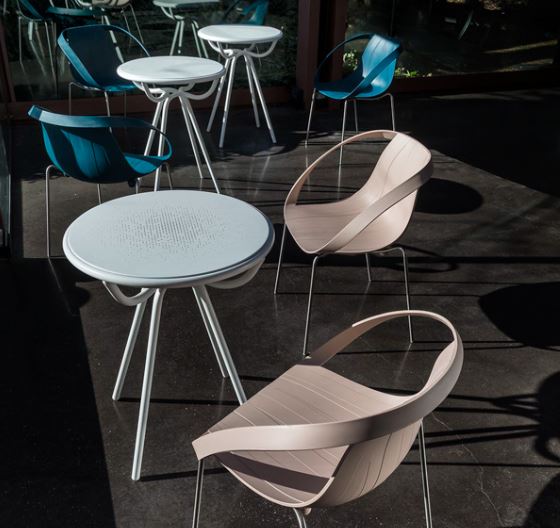
Although the material was presented in 2010, there are
still many people who are unaware of this innovation. A material
which allowed its inventors, Jürgen Pfitzer and Helmut Nägal (Tecnaro),
to win the European inventors’ prize in this year.
Arboform has the appearance and base of wood, but with the
advantage of modularity. That’s it! Arboform is easily mouldable
as plastic. Its composition is completely organic: from lignin
(leftover material from paper manufacturing), linen, fibres,
resins and other additives of natural origin. It is considered
as the successor of plastic, “the green alternative” which, due
to its appearance and malleability, offers great design
possibilities.
Is Liquid Wood The Next Trend In Sustainable Home Furniture?
There's always something new in the world of interior design,
and with sustainability gaining traction, there's one material
that seems to be on its way to becoming the next big thing:
liquid wood, also known as Arboform. Despite what the name
implies, the wood is not a liquid — at least not in its final
form. Liquid wood is a bioplastic composite made of lignin,
cellulose, and natural wax with flax, hemp, or sisal as fillers.
Lignin is a natural polymer that makes plants rigid and woody.
Interestingly, it is the second most abundant natural polymer
after cellulose. This substance is often produced as a byproduct
of pulping in the paper industry. To make liquid wood, lignin is
mixed with natural fibers and binding agents like wax or resin.
The result is a material that looks and even smells like wood.
Physically, liquid wood behaves remarkably like plastic; it
melts when heated and hardens when cooled. Unlike plastic,
however, it is made of 100% biodegradable ingredients instead of
petroleum.
In its liquid state, Arboform can be injection-molded to create
various pieces of furniture and decor. This makes it just as
versatile as plastic without all the toxicity. Of course, liquid
wood should not to be confused with products like Retique It
Liquid Wood, a wood-based coating that is used to give plastic
or laminate furniture as well as vinyl or laminate flooring a
real wood finish. Arboform, on the other hand, is shaped into
furniture itself. Many people are hunting for more ways to
incorporate sustainable wood material everywhere in their
home, so it's only a matter of time until liquid wood starts
trending as a practical and eco-conscious choice for furniture.
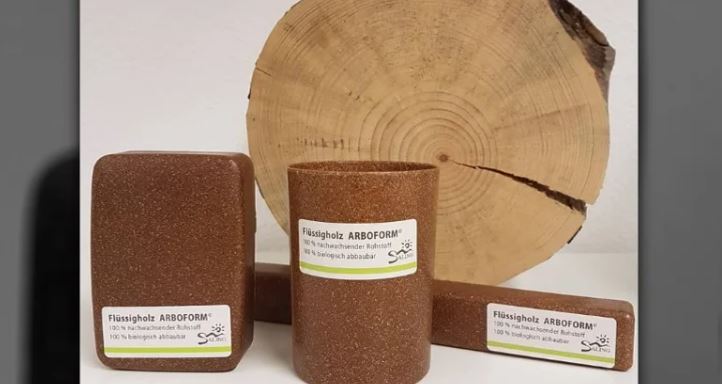
Liquid wood is a versatile material with some drawbacks
Much like any other furniture and decor material, liquid wood
has its pros and cons. Arguably, it's biggest advantage is that
it's completely plant-based and doesn't rely on non-renewable
resources like petroleum. Besides being eco-friendly and
biodegradable, it is also heat-resistant. Its ability to
withstand higher temperatures than thermoplastics makes it more
versatile than plastic when it comes to creating decorative
elements. Plus, it can be made to mimic the look and texture of
actual wood, so it's a warm trend that will never go out of
style, perfect for adding visual interest and a natural feel.
Liquid wood is highly customizable, too; you can dye lignin in
various shades and blend it with different natural fibers like
jute, hemp, and rattan. As a result, you have a piece of
furniture that's not only practical but also aesthetic.
However, processing liquid wood requires high levels of heat and
pressure. This means a lot of energy goes into producing this
composite. While the material itself is eco-friendly, the
manufacturing process does leave behind a carbon footprint.
Another downside is that, despite being rigid, liquid wood
furniture can be somewhat brittle. In other words, it's not
ideal for heavy load-bearing parts like table legs — although
you can use it for chair seats, armrests, and tabletops, as well
as various decor pieces. Arboform can also be expensive, with a
wholesale price of around $1.60 per pound. Even with these
drawbacks, it's surprising that the liquid wood trend hasn't
taken off sooner because the pros still outweigh the cons. Yes,
it takes a lot of energy to produce, but so does plastic — and
at least liquid wood biodegrades in just 120 days, whereas
plastic stays in landfills and oceans for decades, if not
centuries.
Source: housedigest.com


