A Natural Partnership for Sustainability in Wood
Packaging
The collaboration between Stora Enso and Novapor is based on a
shared vision of reducing the environmental impact of packaging.
Juulia Kuhlman, Director of Business Development at Stora Enso
Biofoams, explained, “Collaborating with Novapor is a natural
fit for us. With 50 years of experience in developing innovative
packaging, they consistently go the extra mile to solve their
clients’ challenges. This curiosity and drive have been key to
the success of our pilot project.”
The introduction of Papira represents a significant step forward
in making the industry’s packaging more sustainable. Traditional
packaging materials, such as polyethylene foam, are being
replaced by a solution that is both biodegradable and
recyclable. The new wood fibre-based foam is an important
addition to the growing demand for mono-material packaging that
is fully recyclable within paper and cardboard streams.
Meeting the Demand for Mono-Material Packaging
Novapor Nordic, part of the Novapor group, identified a growing
need among their clients for a more eco-friendly packaging
solution. For example, Københavns Møbelsnedkeri, a high-end
bathroom mirror manufacturer, needed a sustainable alternative
to polyethylene foam. The company wanted a mono-material
packaging solution that would be fully recyclable, aligning with
their commitment to reducing their carbon footprint.
“The transition to wood fibre-based solutions is a crucial next
step in packaging. Mono-material packaging made entirely of
cardboard and paper, rather than plastic combinations, is highly
relevant for our client,” said Thomas Søgaard, Head of Novapor
Nordic. His team began collaborating with Stora Enso two years
ago, working to perfect the process of converting Papira for
use. “Switching from fossil-based PU or PE to paper fibre
requires redesigning the packaging to suit the unique
characteristics of cellulose foam, but the results have been
impressive,” Søgaard explained.
Challenges and Advantages of Wood Fibre-Based Packaging
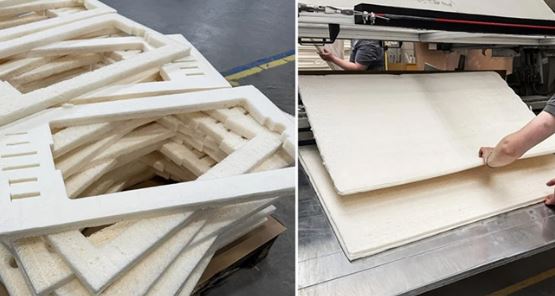
Switching to a wood fibre-based foam like Papira offers numerous
advantages, but it also comes with some challenges. The material
is easier to handle and convert than conventional foams, with no
dust or static electricity, which makes it ideal for woodworking
applications. Moreover, the ability to use water-based glues
rather than hot glue makes the solution even more sustainable.
Novapor is known for its expertise in conversion using water jet
cutting machines, and adapting their processes to handle Papira®
has been key to successfully bringing this new material to
market. “We’ve been able to overcome the challenges of
converting paper-based foam materials with great success,” said
Søgaard. “The collaboration with Stora Enso has been vital in
ensuring that the market is ready for Papira® as soon as it is
ready for mass production.”
A More Sustainable Future for Packaging in Woodworking
The pilot project between Stora Enso and Novapor is just the
beginning. The goal is to expand the use of Papira® across the
woodworking industry, providing a more sustainable, eco-friendly
alternative to traditional packaging. As the industry faces
growing regulations on waste management and recycling, the
ability to recycle packaging materials through regular paper and
cardboard streams becomes even more important.
“The rules and regulations on waste management are strict, but
they will become even stricter by 2030. Offering a foam material
that can be recycled in regular paper and cardboard streams is a
significant advantage,” Kuhlman said. This is crucial for
companies in the industry looking to stay ahead of future
regulations while maintaining their commitment to
sustainability.
Biodegradability and Lower Carbon Footprint
Both Stora Enso and Novapor are committed to reducing the carbon
footprint of the packaging industry. As Søgaard notes,
“Biodegradability and lowering your carbon footprint are hot
topics for our clients. We are proud to support Stora Enso and
Papira®, and they are supporting us in turn. It is a great
collaboration.”
This partnership is already reaching clients who are excited
about the benefits of wood foams. Københavns Møbelsnedkeri is
one of the pilot projects, and Stora Enso is thrilled to be part
of their transition to sustainable wood foams. “We are very
excited for the future,” Kuhlman said.
Expanding the Reach of Sustainable Wood Packaging
Novapor continues to reach out to potential clients in
industries where Papira® can offer both functional and branding
benefits. The wood fibre-based foam is especially suitable for
premium products, like those in the woodworking sector, where
packaging not only needs to be functional but also align with
brand values of sustainability.
Stora Enso’s innovative Papira material, combined with Novapor’s
expertise in conversion and design, promises to reshape the
future of packaging in the woodworking industry. As demand for
sustainable packaging grows, the impact of this collaboration
will be felt worldwide, offering eco-friendly alternatives to
conventional packaging while supporting the industry’s shift
towards more sustainable practices.
The collaboration between Stora Enso and Novapor is leading the
way towards a sustainable future for packaging in the
woodworking industry. With Papira, both companies are pioneering
new, wood fibre-based solutions that reduce carbon footprints,
offer recyclability, and meet the growing demand for sustainable
packaging. As the industry embraces these innovative materials,
Stora Enso and Novapor are setting a new standard for
eco-friendly packaging solutions.
Source:
Stora Enso


