Raw material availability and regulation were two of the major
talking points for wood-based panel producers at this year’s
European Panel Federation (EPF) AGM & conference in Berlin this
year.
The June 27 conference at the Melia Berlin Hotel saw
hard-hitting presentations by EPF managing board member Stefan
Zinn (Pfleiderer) and Holger Lösch, executive board member of
the Federation of German Industries, on the industry future in
the face of transformation and geopolitical challenges.
The EPF Annual Report 2024-2025 was also released, showing
the final production figures for the European wood-based panels
industry – a 2.7% growth in output during 2024 to 58.1 million
m3.
The figure is slightly higher than the provisional statistics
shared at the Interzum exhibition in May, when production growth
was expected to be up 1.9% to 57.4 million m3. The stats have to
be viewed in light of a -6.2% reverse in 2023.
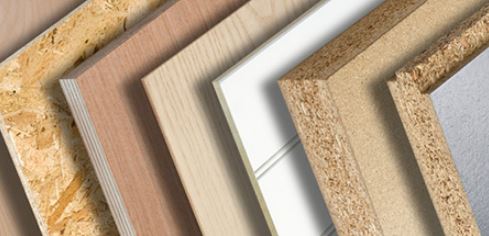
Finals stats show particleboard recorded a 1.5% growth to
31.3 million m3, while MDF grew 1.9% to 11.3 million m3 and OSB
reached 7.1 million m3 – a 5% rise on the previous year.
Stefan Zinn, EPF board member, told delegates that the industry
was experiencing very challenging times.
“It is even more important to have clear guidance and strong
support for the industry,” said Mr Zinn.
Holger Lösch, executive board member of the Federation of German
Industries, said European regulations were trying to do the
impossible and performing “gymnastics” in their policy approach.
This came, he said, from a general distrust towards
businesspeople from Europea policymakers and a risk averse
approach.
Mr Lösch said policymakers were understanding that the industry
had tough challenges, but they were also intent on ambitious
climate targets. “There is an internal fight about what measures
we need to take to gain business confidence again, while still
helping climate targets,” he said.
“We need to get away from this attitude of regulating every
detail because it is ruining our innovation.”
New EPF managing director Matti Rantanen reported a growth in
building permits towards the end of 2024 (+14%) and the start of
2025 (+5%), following a declining trend in recent years. But he
said economic sentiment remains in “negative territory” for the
industry.
The furniture sector experienced a minor increase in production
in Q1, 2025 year-on-year, after a 20% decline from mid-2022 to
the end of 2024.
Mr Rantanen summarised by saying private consumption is the main
current growth driver in the EU27, while there is now reduced
uncertainty in the construction sector. He said there is a
turning point in the EU housing market amid improve
affordability, rising real wages and declining interest rates.
Source:
EPF


