|
1.
CENTRAL AND WEST AFRICA
Fuel shortages add new operational pressure
Fuel availability has become an important concern across
Gabon. Diesel and petrol supplies were severely disrupted
for several days recently with some up-country sawmills
reportedly waiting for deliveries of gasoil that failed to
arrive. This temporarily affected operations and created
the risk of further delays in harvesting, trucking and mill
production.
The government had indicated that supplies would return
to normal by 4 October, although this did not happen as
expected. Diesel has since returned to the market but
petrol availability remains problematic.
There is widespread market speculation that the shortages
could precede an increase in pump prices of around
FCFA200 per litre. Figures of approximately FCFA895
for petrol and FCFA855 for diesel are being discussed
locally, although no official price increase has yet been
confirmed. The situation is being watched closely because
any significant increase in fuel prices would directly affect
harvesting, trucking and delivered timber costs.
Heavy rain affecting operations across the region
Across Gabon, Cameroon and the Republic of the Congo
heavy rainfall is increasingly affecting forestry operations.
Log supply to mills has declined as forest roads become
more difficult to navigate. Road transport to the ports of
Douala and Pointe-Noire are also being affected. This
comes at a difficult time for the industry with international
demand already relatively subdued.
Markets remain challenging
International timber demand remains relatively subdued,
leaving producers with limited scope to recover higher
transport and production costs through price increases.
Infrastructure developments offer some longer-term
positives. The proposed upgrading of the Cameroon–
Bangui corridor could materially improve timber logistics
from the Central African Republic, while Gabon's
continued investment in the Nkok Special Economic Zone
demonstrates the government's broader industrial
ambitions.
However, the dispute surrounding Nkok's fiscal
exemptions will require careful observation. Maintaining
confidence among existing and potential investors will
depend heavily on the stability and predictability of the
investment conditions originally offered by the
government.
With Europe becoming increasingly difficult from a
regulatory perspective and subdued demand in China
producers continue to look for alternative destinations.
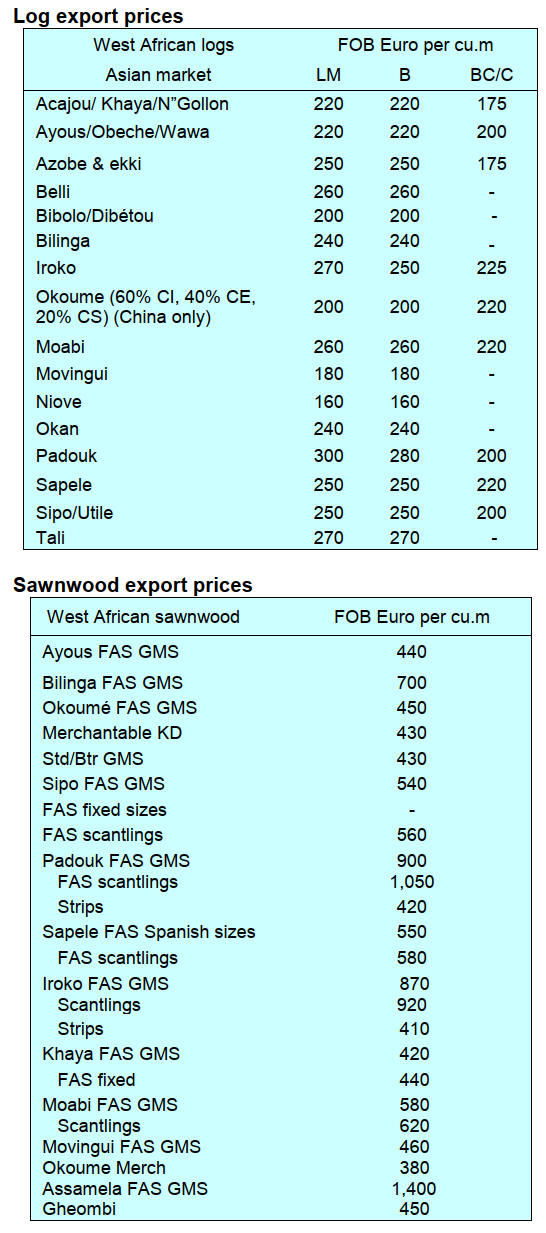
Bangladesh, Pakistan and Jeddah are importing Azobé and
Okan from Gabon and Liberia. These markets are
increasingly attractive because exporters do not face the
same EUTR-related requirements associated with
European destinations.
This diversification is becoming an increasingly important
feature of the West and Central African timber market.
Gabon
Nkok Special Economic Zone
President Brice Clotaire Oligui Nguema has laid the
foundation stone for a new data centre within the Nkok
Special Economic Zone, demonstrating the government's
intention to broaden the zone beyond its traditional timber-
processing activities. However, uncertainty has emerged
regarding the fiscal environment within Nkok.
The government has reportedly decided to cancel or
reduce certain tax exemptions previously granted to
operators within the Special Economic Zone. This has
generated considerable concern among existing
companies, particularly where original investment
agreements reportedly included exemption periods of 10
or 15 years.
Operators continue to challenge the proposed changes.
From an investment perspective, the dispute is significant
because companies considering future projects will want
clarity that agreed fiscal incentives will remain valid
throughout their contractual period.
Chinese-owned mills a major feature of Gabon’s
timber industry
Chinese-owned processing operations remain important
within Gabon's timber industry, particularly within the
Special Economic Zone. Plywood manufactured by
Chinese factories in Gabon is currently being exported to
destinations including Italy, Morocco, the United
Kingdom and the United States. Chinese manufacturers
also continue to process timber sourced more widely from
Central Africa, including material originating from the
Congo and Equatorial Guinea.
Harvesting slows
Weather conditions have changed considerably from the
unusually dry pattern reported during September. Earlier
expectations that Gabon could remain relatively dry for an
extended period have therefore not materialised. Up-
country rainfall is now described as heavy and
deteriorating road conditions are beginning to affect
forestry operations.
Harvesting is consequently slowing. However, weather is
only part of the reason: weak demand from China and the
Middle East continues to restrict production. The principal
species being harvested remain Okoumé, Okan, Azobé and
the major redwoods.
Overall Gabonese harvesting is reported to remain at
approximately 3 million cubic metres annually, with
production directed towards domestic processing through
veneer and sawmills rather than unprocessed log exports.
Trucking and infrastructure developments
Transport from eastern and southern production areas
towards Libreville and Owendo currently takes two to
three days under good conditions, although the return of
heavy rainfall is increasing the risk of delays.
The government has announced a major programme
covering approximately 3,000 kilometres of road
rehabilitation over four years. The intention is to
progressively replace or improve existing routes using
concrete and asphalt construction, supported by financing
from the Islamic Development Bank and the African
Development Bank.
The Bifoun–Ndjolé section of the national road, covering
approximately 75 kilometres, remains in particularly poor
condition and continues to represent a serious transport
constraint.
Owendo Port dredging concerns
Operations at Owendo remain functional but vessel delays
are increasing. Concerns are growing among exporters that
without regular dredging the effective depth of the
harbourt will drop.
Outlook
Internationally, the market remains fragmented. China is
subdued, Europe is increasingly difficult because of
regulatory requirements and producers are therefore
strengthening relationships with alternative markets
including Bangladesh, Pakistan and Jeddah.
The immediate outlook remains cautious, with weather,
fuel availability, port access and government financing
likely to be the principal factors determining market
conditions through the remainder of October.
Cameroon
Infrastructure developments and logistics
A potentially important infrastructure development
concerns the national road connection towards Bangui in
the Central African Republic. President Paul Biya's
administration has reportedly agreed to proceed with the
tarmacking of the national road towards Bangui. If
completed, this would represent a significant improvement
for regional trade.
The route is particularly important to the timber sector
because substantial volumes of timber originating in the
Central African Republic move through Cameroon
towards Douala. A fully paved road would reduce
transport times, vehicle damage and seasonal disruption
caused by rainfall.
Heavy rains remain the principal operational challenge.
Harvesting is being disrupted, laterite roads remain
difficult and the movement of logs from both Cameroon
and neighbouring countries towards Douala continues to
experience delays.
The principal operational constraints remain associated
with transport, port congestion and the movement of
timber towards export facilities rather than any major
change in labour availability or mill operations.
Timber movements remain subject to strict weight controls
and weighbridge inspections. The latest information also
highlights the presence of military personnel at some
transport-control points, reinforcing the level of scrutiny
applied to timber movements. These controls remain
relevant for both domestic timber and material arriving
from neighbouring countries for onward export through
Cameroon.
The market remains subdued and producers continue to
align output closely with confirmed orders rather than
increasing production. Weak demand from China and
parts of Europe continues to limit activity, while Vietnam
remains comparatively stronger for selected hardwood
species.
Port congestion
Congestion at the Port of Douala continues. A further
navigational problem has now been identified in the form
of a sandbar in the Wouri River. This is creating an
additional obstacle for vessel movements and adds to
existing congestion within the port system.
No significant disruption has been reported at Kribi Port
during the current period. The port continues to provide an
important alternative containerised export route and
remains strategically important as Douala faces increasing
congestion and navigational constraints.
European regulatory concerns
Concern continues to increase regarding the potential
economic impact of EUDR. Cameroonian operators fear
that the requirements could have a significant impact not
only on timber exports but also on other agricultural
commodities. The principal concern is that more
demanding traceability and documentation requirements
will increase costs, delay exports and make European
markets less commercially attractive.
The regulatory pressures in Europe come at a time when
international timber demand is already weak. As a result,
producers are continuing to monitor opportunities in
alternative destinations, particularly across Asia and other
markets where regulatory requirements may be less
onerous. This reflects the wider regional trend already
being seen across Gabon, Congo and Cameroon, where
producers are attempting to reduce their dependence on
European buyers.
Outlook
Cameroon's timber market remains cautious entering the
second half of October. The major operational challenge is
increasingly concentrated around logistics rather than
container availability. Congestion at Douala, the sandbar
in the Wouri River, road conditions and strict transport
controls are all contributing to longer delivery times.
The proposed rehabilitation of the Douala–Bangui road is
therefore a potentially important long-term development,
particularly for timber originating in the Central African
Republic.
Overall, production is expected to remain closely matched
to confirmed orders until there is clearer evidence of
stronger international demand.
Republic of the Congo
Pressure from rising fuel and energy costs
Fuel and energy costs are becoming an increasingly
important factor for forestry operators. Higher diesel
prices feed directly into forest harvesting, heavy
machinery operations, long-distance trucking and port
delivery costs.
These pressures are particularly significant in Central
Africa, where timber may travel hundreds of kilometres
from concessions to mills or export ports. Any sustained
increase in fuel prices would therefore place additional
pressure on timber export prices at a time when producers
already have limited ability to pass higher costs on to
international buyers.
Normal harvesting levels but demand a constraint
Harvesting continues at broadly normal operational levels
but overall production remains restrained because of
relatively weak demand from both Asian and European
markets. The return of rain is beginning to make forest
access more difficult and is likely to increase pressure on
laterite roads over the coming weeks.
Port operations remain stable
Pointe-Noire continues to benefit from its position as a
deep-sea hub port and no major disturbances have been
reported during the current period. The wider port
expansion programme remains linked to plans for an
associated economic zone, which could strengthen the
country's logistics and industrial capacity over the longer
term.
Market outlook
No significant change in overall order or enquiry levels
has been reported. The broader West and Central African
market remains subdued, with China and parts of Europe
continuing to show relatively weak demand. This is
keeping Congolese mills cautious and limiting the
incentive to increase production significantly.
Asian markets remain important but are not currently
strong enough to drive a major increase in production.
Chinese purchasing remains cautious, while demand from
other traditional destinations also remains relatively soft.
Producers are therefore continuing to balance Asian
business against opportunities in Europe and newer export
destinations.
European demand remains available for selected species
but continues to be affected by regulatory and cost
pressures.
As reported across the region, exporters supplying Europe
face increasingly demanding traceability and due-diligence
requirements. These pressures are encouraging Congolese
mills to look more actively at alternative destinations.
Higher freight costs and weak end-market demand are also
limiting the attractiveness of some European business.
2.
GHANA
Teak dominated air-dried sawnwood exports
Available data from the Timber Industry Development
Division (TIDD) of the Forestry Commission (FC)
indicates that Ghana’s total wood expors volumes for the
first seven months (January to July) declined by 8% from
126,980 cu.m in 2025 to 116,355 cu.m in 2026, a
corresponding fall in value of 13%.
The fall in value was steeper than volume, resulting from
lower average unit prices for most products during the
period.
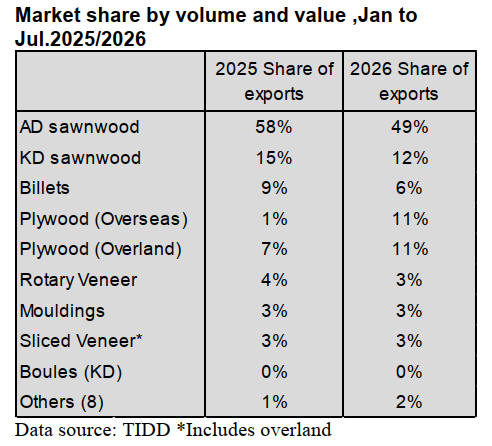
Air dry sawnwood accounted for the largest export volume
but, year on year, was down 24% from 74,124 to 56,451
cu.m and the value was also down by 33%.
The share of the product in total exports fell from 58% in
2025 to 48% in the corresponding period in 2026,
registering a loss of almost 10% year-on-year. Regional
exports of kiln dry sawnwood also declined by 22% in
volume and 18% in value.

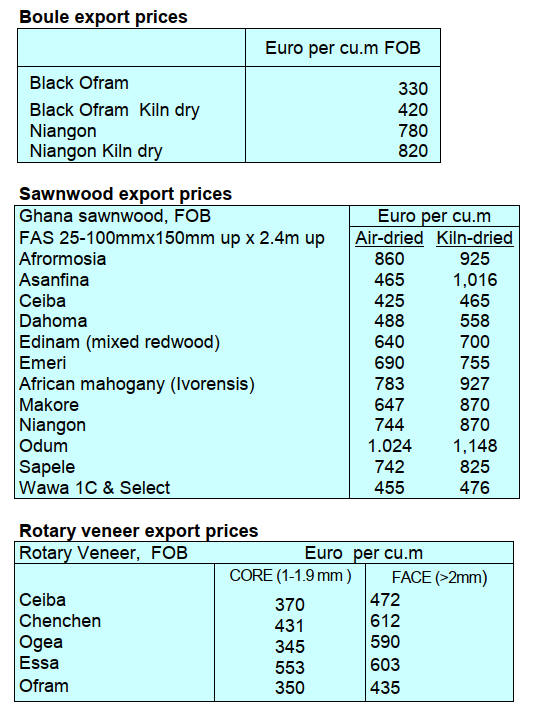
Cumulative data revealed that teak dominated air-dried
export products at 45,426 cu.m and an 80% share valued
at Eur14.10 million. Other species included Denya/Okan
6,283 cu.m, valued at Eur2.44 million. Exports of Papao,
Dahoma, Kaku, Wawa and Cedrela were small.
Only 11 species recorded exports in July with no exports
for 16 other species including Wawa, Odum/Iroko, Sapele
and Niangon, though they recorded volumes in the
previous months.
Other products which experienced year-on-year declines
included billets down by 41% in volume and 51% in
value. Billets as a share of exports dropped from 9% to 6%
for 2025 and 2026 respectively. Rotary veneer export
volumes and value fell by 20% and 13% and moulding
exports dropped 7% by volume and 5% by value.
Commercial bank rates to businesses
The Finance Minister Dr. Ato Cassiel Forson says the cost
of capital for businesses in Ghana has fallen by more than
half since January 2025, with the government targeting to
bring the cost of borrowing to single digits. Dr. Forson
indicated that businesses can now borrow from banks at
rates ranging between 9% to 13%, a reduction welcomed
by the government as part of efforts to make it cheaper for
businesses to access bank financing to expand their
operations.
In a related development, the Chairman of the
Agribusiness Sector of the Association of Ghana
Industries (AGI), William Agyei Manu, has appealed to
the Bank of Ghana (BoG) and government to review the
implementation of loan moratoriums to reflect the
repayment realities of businesses.
He made the call during a sensitisation programme on the
Borrowers and Lenders Act, 2020 (Act 1052), organised
by the Bank of Ghana’s Collateral Registry in Kumasi in
the Ashanti Region.
Mr. Agyei Manu said loan moratoriums are a major
concern as retail repayment terms don't suit manufacturers
and agribusinesses. He urged a law-based review
reflecting cash-flow cycles, warning rigid terms could
raise non-performing loans and noted Bank of Ghana will
consider moratoriums in amending the Act 1052.
Mr. Agyei Manu also said access to credit remains one of
the major challenges confronting businesses in Ghana. He
said the AGI’s Business Barometer reports have
consistently identified access to credit, alongside energy,
as a key concern for private sector operators.
See: https://www.modernghana.com/news/1531817/we-have-
cut-cost-of-capital-by-more-than-half-sinc.html
and
https://www.citinewsroom.com/2026/09/agi-calls-for-review-of-
loan-repayment-terms/
TUC welcomes government’s ‘New Economy’ for
Ghanaian workers
The Minister of Finance, Dr. Cassiel Ato Forson, says the
Government’s New Economic agenda will prioritise the
creation of jobs and the improvement of living standards
for Ghanaian workers. He made the statement during a
meeting with the leadership and members of the Trades
Union Congress (TUC) where he outlined the
Government’s economic priorities.
According to Dr. Forson, the top pillars of government
were economic stabilisation and broader economic
transformation. He explained that the Government had
now reached the stage where it could focus more directly
on the micro-economy, particularly job creation and
support for businesses.
Dr. Forson further explained that the next phase of the
government’s economic programme would place workers,
businesses and employment at the centre of the country’s
transformation agenda.
The General Secretary of the TUC, Joshua Ansah,
welcomed the ‘New Economy’ initiative and expressed
hope that it would succeed in creating opportunities and
improving wages for Ghanaian workers.
Vish Ashiagbor, an executive of an international financial
company has urged businesses to adapt their operations,
strengthen commercial relationships and explore new
markets as Ghana’s economy moves toward greater
private-sector participation.
He said the economy has reached an “inflection point”,
requiring companies to improve execution, access to
capital and operational efficiency rather than rely heavily
on government spending to drive demand.
See: https://www.graphic.com.gh/business/business-news/new-
economy-government-to-prioritise-creation-of-decent-jobs-
finance-minister.html
and
https://www.graphic.com.gh/business/business-news/ghana-
economy-at-inflection-point-as-pwc-calls-for-new-markets-
capital-and-efficiency.html
Calls for enhanced risk system to boost lending to
SMEs
The President of the Ghana Association of Banks (GAB),
John Awuah, said banks are willing to lend more to Small
Medium Enterprises (SMEs) but weaknesses in trade
performance undermine repayment ability.
Speaking at the Chartered Institute of Bankers Ghana
(CIB-Ghana) Post-MPC Policy Seminar, he said focus
must shift from directing banks to lend to de-risking the
business environment, backed by stronger systems to
reduce risks for businesses and lenders. "Before we start
talking about lending to SMEs we need to ensure that the
credit chain is properly structured," he said, citing
agriculture where farmers obtain financing, increase
production, yet default because farmers fresh produce rots
due to lack of storage and demand.
He described commodity exchange as dysfunctional and
warehouse receipt systems as inefficient.
Mr. Awuah signaled that a falling Non-Performing Loan
(NPL) ratio may reflect loan book expansion, not
improved repayment culture, stressing NPLs threaten
principal. He therefore called for stronger credit
architecture and information systems to differentiate
borrowers and price risk appropriately.
The GAB President explained that banks are lending to the
SMEs but a lot more can be done to reduce the risk
environment.
In related news, the Bank of Ghana (BoG) is preparing to
tighten banks’ credit risk management requirements as
private-sector lending accelerates, with the regulator
warning that rapid credit expansion must be matched by
stronger underwriting and risk controls.
Governor Dr. Johnson Pandit Asiama, said the Bank will
soon issue a new credit risk management directive to
complement guidelines introduced last year. This directive
will cover the full credit cycle, including origination,
administration, monitoring, measurement and recovery.
The move comes as private-sector credit growth reached
35.5% in August 2026, up from 13.3% a year earlier. In
real terms, credit expanded by 29% compared with about
1.7% over the same period last year, reflecting stronger
demand and an easing of lending conditions.
The acceleration has been supported by a sharp decline in
the average lending rate. The banking sector’s average
lending rate fell to 15.9% in August from 24.2% a year
earlier,
See: https://www.citinewsroom.com/2026/09/ghana-must-de-
risk-sme-environment-to-boost-lending-gab/
and
https://gnbcc.net/news/bog-to-tighten-credit-risk-rules-as-
private-sector-lending-accelerates
3. MALAYSIA
January to April exports disappoint
Malaysia’s exports of wooden furniture strengthened in
April 2026, increasing by 27% to RM658.4 million
compared to RM518.3 million in March. Despite the
strong monthly recovery cumulative exports for the
January–April 2026 period remained lower at RM2.48
billion, representing a 20% decline from RM3.08 billion
recorded during the corresponding period of 2025.
At the regional level, ASEAN continued to be the largest
destination for Malaysian wooden furniture exports with
shipments valued at RM352.2 million during January–
April 2026, a decline of 5% from RM371.8 million in the
same period of 2025.
Singapore remained the leading market within the region,
importing RM241.9 million worth of Malaysian wooden
furniture (2% lower than the previous year). Exports to the
Philippines declined by 15% to RM58.7 million while
shipments to Indonesia recorded a marginal increase of
1% to RM21.6 million.
North America remained Malaysia’s largest international
market for wooden furniture despite recording a sharpe
decline in export value. Exports fell by 26% to RM1.34
billion, compared to RM1.82 billion during January–April
2026.
The downturn was primarily driven by weaker demand
from United States, which declined by 28% to RM1.18
billion, while exports to Canada and Puerto Rico also
decreased by 12% and 25% to RM117.2 million and
RM18.1 million, respectively.
See: https://www.mtib.gov.my/maskayu/category/49-emaskayu-
2026.html
Malaysian timber certification sScheme - public
consultation
The Malaysian Timber Certification Council (MTCC)
announced the public consultation on the draft Malaysian
Timber Certification Scheme (MTCS) ED 1004:2026
(Enquiry Draft) Requirements for Certification Bodies
Operating the Malaysian Timber Certification Scheme
(MTCS) Malaysian Criteria and Indicators for Sustainable
Forest Management (MC&I SFM).
MTCS ED 1004:2026 was developed by the Technical
Committee for MTCS ST 1004 to align with the
requirements of the PEFC ST 1004:2024 Requirements for
Certification Bodies operating Certification against PEFC
Endorsed Forest Management Standards. The Enquiry
Draft consolidates the Accreditation of Certification
Bodies – Forest Management Certification (ACB FMC)
documents and current requirements for Certification
Bodies (CBs) undertaking forest management certification
under MTCS into a single standard.
Rather than serving as a separate supplement to ISO/IEC
17021 1:2015 (the primary requirements for management
system certification bodies), the draft references and
incorporates ISO/IEC provisions, providing users with a
single authoritative standard.
See: https://mtcc.com.my/announcement-for-public-consultation-
mtcs-ed-10042026-requirements-for-certification-bodies-
operating-the-malaysian-timber-certification-scheme-mtcs-
malaysian-criteria-and-indicators-for-sustainab/
Sabah TLAS+ strengthens the original legality
foundation
Timber legality in Sabah requires compliance with State
laws throughout the supply chain from harvesting to
export. The Sabah Timber Legality Assurance System
(TLAS) provides a due diligence framework to help
ensure that timber and wood products originating in Sabah
are legally harvested, processed and traded in accordance
with local requirements and internationally recognised
standards.
Sabah TLAS+ is an integrated assurance framework
combining legal compliance, traceability, deforestation-
free verification and responsible business conduct across
Sabah's timber supply chain. Sabah TLAS+ strengthens
the original legality foundation by integrating with two
additional principles for market readiness. Two additional
Principles were added to the six original Principles of the
TLAS.
(Principle 7) Deforestation Free. Mandatory for applicable
areas to verify that timber is not linked to deforestation or
forest degradation after 31 December 2020, supported by
geolocation and proof of origin.
(Principal 8) Corporate Sustainability Due Diligence
Directive. Voluntary basis and readiness for companies to
implement responsible business practices that strengthen
ESG compliance through the identification and
management of environmental, social and labour-related
risks.
The TLAS+ is of importance to industrial tree plantations
to:
Prove legal and deforestation-free origin after 31
December 2020.
Trace timber using geolocation and QR-enabled
chain-of-custody.
Strengthen buyer confidence through independent
third-party auditing.
Supports forest conservation, credible timber trade
and long-term economic resilience.
The official launch of the Sabah Timber Legality
Assurance System Plus (Sabah TLAS+) took place in
February 2026. Audit of the TLAS+ for both upstream and
downstream industries commenced in July 2026. The
Sabah TLAS+ Audit Checklist was recently released for
use by auditors during the audit and verification process.
See:
https://www.nst.com.my/news/regional/2026/02/1371807/sabah-
launches-upgraded-timber-system-meet-international-standards
Sabah carbon projects
Sabah currently has two ongoing carbon projects, the
Innoprise-Face Foundation Rainforest Rehabilitation
Project, which dates back to 1992 and the Kuamut
Rainforest Conservation Project with Permian.
The Forest Enactment 1968 was amended by the State
Assembly in 2025 to introduce a regulatory framework for
forest cover activities in Sabah. Sabah Forestry
Department (SFD) Forest Sector Planning Division Head
Rosila Anthony said Section 28D of the Forest Enactment
1968, which came into effect on May 15, 2025, regulated
forest cover activities in Sabah through a licensing and
enforcement framework.
It applied to forest cover activities carried out within forest
reserves and other forest areas prescribed under the Forest
Enactment, with such activities only permitted under a
licence issued pursuant to Section 28D and subject to
prescribed conditions.
See: https://www.dailyexpress.com.my/news/289135/sabah-s-
two-carbon-projects-ongoing/
Expanding eucalyptus plantations
Acacia Forest Industries, a joint venture between the
Sabah Forestry Development Authority and the Samling
Group, has applied for an additional 5,000 hectares of land
to expand its Eucalyptus Pellita plantation operations in
Bengkoka, Sabah.
The State Government will consider the application
following the plantation's solid contribution to State
revenue and the sector's growth potential under the Sabah
Maju Jaya roadmap.
See: https://www.dailyexpress.com.my/news/288684/afi-applies-
for-5-000-hectares-to-expand-pitas-eucalyptus-plantation/
4.
INDONESIA
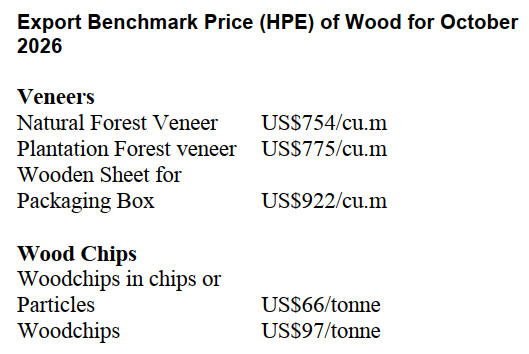
Processed Wood
Processed wood products which are leveled on all four
sides so that the surface becomes even and smooth with
the provisions of a cross-sectional area of 1,000 sq. mm to
4,000 sq.mm (ex 4407.11.00 to ex 4407.99.90)
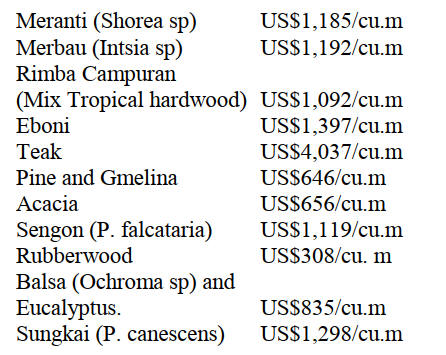
Processed wood products which are leveled on all four
sides so that the surface becomes even and smooth of
Merbau wood with the provisions of a cross-sectional area
of 4,000 sq.mm to 10,000 sq. mm (ex 4407.11.00 to ex
4407.99.90) = US$1,500/cu.m
See: https://jdih.kemendag.go.id/peraturan/keputusan-menteri-
perdagangan-republik-indonesia-nomor-1921-tahun-2026-
tentang-harga-patokan-ekspor-dan-harga-referensi-atas-produk-
pertanian-dan-kehutanan-yang-dikenakan-bea-keluar-dan-tarif-
layanan-badan-layanan-umum
Furniture industry urged to reduce dependence on US
market
The Coordinating Minister for Economic Affairs,
Airlangga Hartarto, has urged the furniture industry to
diversify its export markets and reduce its reliance on the
United States which accounts for around 60% of
Indonesia’s furniture exports.
Airlangga said Indonesia has significant potential to
expand its global market share due to its abundant timber
resources and status as a major supplier of rattan.
However, producers must adapt to growing demand for
functional, customised and sustainable products while
overcoming technological and productivity constraints.
Furniture manufacturing - productive capacity
utilisation only 60%
Indonesia’s government is taking steps to strengthen the
furniture industry’s export competitiveness by
encouraging producers to develop distinctive, functional,
sustainable and traceable products that meet evolving
global buyer preferences.
Deputy Minister for Economic Cooperation and
Investment Coordination, Edi Prio Pambudi, noted that the
industry’s production capacity is growing but its utilisation
rate remains around 60%, leaving room for further
expansion. Government measures include securing legal
and sustainable raw materials, modernising machinery,
digitalising production, strengthening furniture industry
centers such as Jepara and Cirebon and improving
workforce skills.
These efforts are particularly important because the
labour-intensive sector supports around 960,000 workers,
most of whom are employed by small and medium-sized
enterprises.
See: https://jakartaglobe.id/special-updates/airlangga-highlights-
market-diversification-global-competitiveness-for-furniture-
industry
and
https://www.jawapos.com/ekonomi/2609240432/tumbuh-1182-
persen-industri-furnitur-indonesia-masih-hadapi-
tantangan?page=all
and
https://swa.co.id/read/477719/pemerintah-perkuat-daya-saing-
ekspor-furnitur-utilisasi-industri-baru-60
and
https://swa.co.id/read/477719/pemerintah-perkuat-daya-saing-
ekspor-furnitur-utilisasi-industri-baru-60
Indonesia’s unique products strengthens
competitiveness
Indonesia’s furniture industry has strong export potential
through its unique, handmade products and diverse raw
materials, according to Indonesian Furniture and
Handicraft Industry Association (Asmindo) Chairman,
Deddy Rochimat. Indonesia currently ranks fourth among
Asia’s furniture industries after China, Vietnam and
Malaysia but remains less competitive in mass-produced
furniture.
Deddy said the industry should focus on distinctive
products made from materials such as bamboo, rattan and
wood, with Indonesia’s relatively competitive labour costs
providing an advantage in the handmade segment.
See: https://swa.co.id/read/477718/keunikan-produk-jadi-
andalan-ekspor-mebel-indonesia
ISWA promotes technology-driven transformation
The Indonesian Sawmill and Woodworking Association
(ISWA) is urging the wood industry to adopt advanced
technology and processing innovations to increase the
value of plantation timber and strengthen Indonesia’s
competitiveness in global markets.
ISWA Presidium Chairman, Jimmy Chandra, said
Indonesia’s diverse timber resources, including teak,
rubberwood, mahogany, pine and fast-growing species
offer strong potential for developing high-performance
products. He stressed that the industry should move
beyond competing mainly on volume and price by
focusing on quality, reliability, technology and value
addition.
He highlighted wood modification, particularly
thermochemical treatment, as a way to improve timber’s
durability, dimensional stability and overall performance,
potentially expanding its use in furniture, architecture,
interiors, construction and outdoor applications.
See: https://forestinsights.id/iswa-dorong-transformasi-industri-
kayu-berbasis-teknologi-dan-nilai-tambah/
Certified furniture and craft products exhibited
Indonesia’s furniture, home décor and handicraft products
were showcased by 35 exhibitors at the 41st Trade Expo
Indonesia (TEI) 2026, scheduled for October 14–18 at ICE
BSD City, Tangerang.
The Ministry of Trade, in partnership with the Indonesian
Furniture Industry and Craft Association (HIMKI) aims to
strengthen the sector’s global competitiveness by
highlighting its high-value products, use of local raw
materials and significant contribution to employment. The
exhibition will feature furniture and crafts made from
certified wood, rattan, water hyacinth and bamboo,
combining modern designs with traditional Indonesian
weaving and carving techniques.
See: https://rri.co.id/en/business/2796857/certified-furniture-and-
craft-products-ready-to-capture-global-markets-at-tei-2026
Briquettes – Spanish businesses showing interest
Indonesian briquettes and processed biomass products are
attracting interest from Spanish businesses which could
lead to new export opportunities for Indonesia’s wood-
processing industry. Three business-matching events held
in Madrid between July and September 2026 and
generated potential transactions worth US$2.31 million.
Indonesian Trade Attaché in Madrid, Ratnaningsih
Hidayati, said trade representatives would continue
facilitating communication between prospective buyers
and local exporters to help realise these opportunities.
The positive market response highlights the potential to
expand Indonesia’s biomass product exports, increase the
value of wood-processing residues and strengthen the
competitiveness of the country’s domestic wood-
processing industry.
See: https://rri.co.id/ekonomi/bisnis/2783979/briket-kayu-
indonesia-dilirik-calon-buyer-spanyol-untuk-restoran-profesional
5.67 million hectares forest for food, energy and
services
The Ministry of Forestry has designated 5.67 million
hectares of forest areas as eligible for business permits
supporting food security, energy, non-timber forest
products (NTFPs) and environmental services under the
2026 Forest Utilisation Guidelines.
The aim is to increase the economic value of forests while
maintaining forest cover and improving management.
Among the designated areas are 387,641 hectares for sugar
palm cultivation as a bioenergy source and 68,454 hectares
for agroforestry involving rice, corn, soybeans, coffee and
cocoa. The government also allocated 902,298 hectares for
forest and land rehabilitation outside permitted areas as
part of efforts to restore degraded forests.
Permit holders in rehabilitation areas may develop
environmental services, NTFPs and carbon-stock
businesses while restoring forests.
See: https://en.antaranews.com/news/433312/govt-allocates-567-
million-hectares-forest-for-food-energy-services
and
https://www.kehutanan.go.id/news/bukan-lagi-sekadar-kayu-
pemerintah-arahkan-5-67-juta-hektare-hutan-untuk-pangan-
energi-dan-jasa-lingkungan
Indonesia and Norway launch new phase of
community forest fund
Indonesia and Norway have launched the fifth phase of the
Community Fund Service scheme under Indonesia’s
FOLU Net Sink 2030 agenda, aimed at strengthening
community-based forest conservation, environmental
sustainability and climate resilience.
The programme has Rp20 billion (around US$1.1 million)
to support 300 community groups to be distributed by the
Ministry of Forestry through the Environmental Fund
Management Agency.
The initiative focuses on three areas: FOLU Biodiversity,
which promotes biodiversity conservation; FOLU Goes to
School, which encourages students to participate in
sustainability efforts; and FOLU Terra, which seeks to
improve community welfare through environmentally
based activities.
Norway has reaffirmed its long-term partnership with
Indonesia on forest conservation and climate resilience
through a results-based contribution mechanism.
Norwegian Ambassador-Designate to Indonesia Kaja
Glomm said Norway has provided US$216 million in
recognition of Indonesia’s verified progress in reducing
emissions from deforestation and advancing the FOLU
Net Sink 2030 agenda.
See: https://rri.co.id/en/national/2791024/folu-net-sink-2030-
community-fund-service-fifth-phase-launched
‘State of Indonesia’s Forests 2026’ launched
Indonesia’s Ministry of Forestry launched ‘The State of
Indonesia’s Forests 2026’ (SOIFO) at the FAO
headquarters in Rome highlighting the country’s 95.5
million hectares of forest as a strategic asset for food
security, climate resilience, biodiversity conservation and
community welfare.
Launched during the 10th World Forest Week alongside
the 28th session of the FAO Committee on Forestry, the
publication outlines the government’s approach to
transforming the forestry sector through forest protection,
sustainable resource utilisation, ecosystem restoration and
community participation.
With forests covering more than half of Indonesia’s land
area, the report emphasises their critical role in regulating
water systems, storing and absorbing carbon and
supporting food production and environmental
sustainability.
SOIFO 2026 also highlights the economic and social
benefits of sustainable forest management, particularly
through Indonesia’s social forestry programme, which had
provided communities with access to manage
approximately 8.37 million hectares through 11,236
approvals as of June 2026, benefiting around 1.43 million
families.
See: https://ecobiz.asia/indonesia-launches-soifo-2026-
highlights-95-5-million-hectares-of-forest/
and
https://www.kehutanan.go.id/news/peluncuran-soifo-2026-di-
fao-tegaskan-peran-hutan-bagi-ketahanan-iklim-dan-
kesejahteraan-masyarakat-1
Multi-Business agroforestry projects
The KADIN Regenerative Forest Business Hub and the
Ministry of Forestry have launched five pilot ‘Multi-
Business Forestry’ (MUK) projects to maximise forest
potential through agroforestry and regenerative
management.
The projects, located in Bukit Tigapuluh in Jambi,
Pesawaran and South Lampung in Lampung, Bentaweah
Kelai in East Kalimantan, Kubu Raya in West Kalimantan
and Peusangan in Aceh, were selected based on
commodity potential, concession and community
readiness and market opportunities.
The initiatives will focus on strategic commodity
development, landscape and area restoration, while
strengthening partnerships with local communities,
creating jobs and increasing farmer participation.
KADIN’s Regenerative Forest Business Hub aims to help
transform Indonesia’s forestry sector from an extractive
model toward regenerative forestry, which it sees as
particularly relevant amid ongoing forest-fire challenges.
See: https://ecobiz.asia/kadin-kemenhut-luncurkan-lima-proyek-
multiusaha-kehutanan-optimalkan-potensi-hutan-dengan-
agroforestri/
National peatland and mangrove agency to strengthen
fire prevention
President Prabowo Subianto has decided to establish a
National Peatland and Mangrove Management Agency
(BPGMN) to strengthen forest and land fire prevention,
particularly in six peatland-rich provinces: Riau, Jambi,
South Sumatra, West Kalimantan, Central Kalimantan and
South Kalimantan.
Reporting directly to the President and supported by
scientists and professionals, the agency aims to shift fire
management from reactive responses to early prevention.
The National Research and Innovation Agency (BRIN)
will assist by developing and upgrading hotspot detection
systems using artificial intelligence (AI), in collaboration
with the Ministry of Forestry.
The government will also implement village-based
prevention strategies that involve local communities in
identifying fire risks and protecting nearby natural
resources. These initiatives are intended to improve early
detection, strengthen coordination and reduce the
frequency and impact of forest and land fires.
See: https://mediaindonesia.com/politik-dan-
hukum/937271/prabowo-bentuk-badan-pengelola-gambut-untuk-
cegah-karhutla
5.
MYANMAR
6.
INDIA
Inflation accelerating
India's headline retail inflation accelerated to 4.82% in
August 2026, up from 4.45% in July 2026, according to
data from the Ministry of Statistics and Program
Implementation. Urban retail inflation was 4.31% in
August (3.96% in July) while rural inflation in August was
5.23% (4.84% in July).
See:
https://eaindustry.nic.in/press_release/press_release_202608.pdf
and
https://www.mospi.gov.in/themes/product/9-consumer-price-
index-cpi
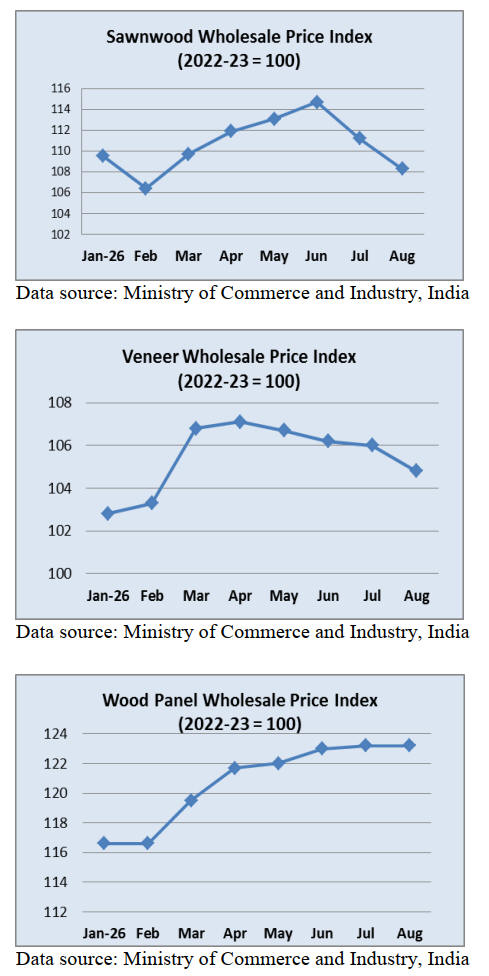
Wood product price indices
The Office of Economic Adviser (OEA), Department for
Promotion of Industry and Internal Trade (DPIIT) has
released the revised series of indices with a base Year
2022-23. The new series has replaced the previous series.
Please note the change in base year when examining the
trends in the graphics below.
Plans for anti-dumping duties on melamine imports
India plans to impose antidumping duties (ADDs) of
US$245/tonne to US$403/tonne on melamine imports
from China. The Directorate General of Trade Remedies
(DGTR) has recommended the imposition of ADDs on
imports of melamine for a period of five years.
India launched antidumping investigations into melamine
imports from China in September 2025 following a
complaint from sole domestic producer Gujarat State
Fertilisers and Chemicals Ltd (GSFC). GSFC currently
has three plants with a combined capacity of 55,000
tonnes/year.
The DGTR noted that “the company was forced to
suspend production in two plants with a combined
capacity of 15,000 tonnes/year” due to “dumped imports”.
Indian wood-based panel and laminate manufacturers,
represented by bodies like the Indian Laminates
Manufacturer's Association (ILMA) and the Federation of
Indian Plywood & Panel Industry (FIPPI), have strongly
urged the government not to implement these duties.
The Department of Revenue at the Ministry of Finance
will now review the ADD recommendation and will
decide on whether to impose the ADD within the next
three months.
See:
https://www.icis.com/explore/resources/news/2026/09/29/11235
293/india-plans-five-year-adds-on-melamine-imports-from-
china/
and
https://dgtr.gov.in/sites/default/files/2026-
09/FF%20Melamine%20NCV%20English%20%281%29.pdf
QCO lifts product quality
Looking back on the Quality Control Order (QCO)
adoption and current state of affairs, Alok Mohta from the
the All India Plywood and Laminate Trade Association,
reflected “despite a remarkable improvement in the quality
of plywood, retailers would be better advised to
authenticate the Bureau of Indian Standards (BIS)
certification of the products and brands they are dealing
with because of late some dealers associated with
ABPLTA had to confront the BIS raids under the
suspicion of selling non-BIS products.“
Therefore, keeping abreast with the brands certification,
detailed documentations and respective QCO amendments
is of foremost importance for dealers and distributors to
avoid attracting the wrath off the Bureau of India
Standards (BIS) officials.
On the predicament of the dealers with regard to falling
prey to fake or non-compliant BIS products suppliers the
Association said “it is the duty of every brand who
conforms with BIS guidelines to educate and inform its
dealers/distributors about the legalities and formal
documentations, required to be secured in case of BIS
scrutiny.‘
During an a recent webinar it was noted that the panel
industry is worth approximately INR60,000 crore
(US$6.18 billion) while the furniture industry is worth
more than IN 2,00,000 crore (US$20.62 billion) but it is
largely un-organised. With BIS in place Indian furniture
manufacturers may get a huge advantage and it has been
reported that some importers have started their own
manufacturing facilities or have aligned with furniture
producers.
On imported furniture the authorities have cautioned
importers receiving non-BIS furniture from neighbouring
countries as they risk of being caught by Customs.
It has been suggested that there are many manufacturers
which are yet to obtain the BIS certification. Estimates say
only around 1,800 have acquired the licence out of around
5,000 units.
See: https://www.plyreporter.com/article/154384/bis-on-small-
scale-furniture-units-will-be-enforced-from-13th-august-2026
India‘s 2026 Monsoon - a decade‘s low rainfall
In India the annual southwest monsoon runs from June to
September and has an impact on the economy. This year
was unusual with an overall national rainfall deficit of
roughly 13%. The rainfall was distributed unevenly with
over 50% of the country experiencing dry or drought
conditions.
Agriculture, food security and consumer spending are
affected by the monsoon. This year, kharif crop areas,
particularly rice paddy, were impacted by the reduced
rainfall raising concerns over harvest yields and low
residual soil moisture needed for the upcoming Kohlrabi
planting.
The weak monsoon creates a "twin shock" for rural
households by shrinking farm incomes and driving up
food inflation, leading to more cautious consumer
spending during Diwali to be celebrated on Sunday, 8
November, 2026. The Reserve Bank of India (RBI)
estimates the monsoon rainfall shortfall could add +20 to
+25 bps to the consumer price index.
According to RBI analyses, the broader rural economy has
shown more resilience than in past decades due to income
diversification, non-farm employment and expanded
irrigation, preventing a full-scale systemic crisis. In other
news, the International Monetary Fund cut India's fiscal 27
GDP growth forecast by 10 basis points to 6.4%, citing the
weak monsoon and global energy shocks as primary
downside risks.
See: https://www.cnbc.com/2026/10/08/el-nino-food-economy-
crisis-india.html
and
https://www.livemint.com/news/india/festive-spending-2026-
bloom-but-no-boom-as-53-of-indians-say-family-finances-have-
worsened-cvoter-survey-diwali-11791604603604.html
Karnataka launches ‘Tegada Siri‘ to encourage farmers
to grow teak
Karnataka Chief Minister, D. K. Shivakumar, has
launched a ‘Tegada Siri‘ (green-cover initiative) aimed at
improving the lives of farmers. The aim is to Encourage
teak and high-value tree cultivation while increasing the
state's green cover. The plan involves planting teak and
other high-value saplings along roadsides and on available
public/private areas over a multi-year period.
Farmers and landowners will be given the responsibility of
nurturing and protecting the saplings. Upon harvest, 70%
of the timber sale value will go to the farmer/landowner,
while 30% goes to the State government. Implementation
will be monitored and organised through local committees
headed by Deputy Commissioners in coordination with the
Forest Department.
See:
https://cm.karnataka.gov.in/1055/highlights-of-the-review-
meeting-on-the-chief-minister%27s-100-day-initiatives,-
recruitments,-and-priority-projects/en
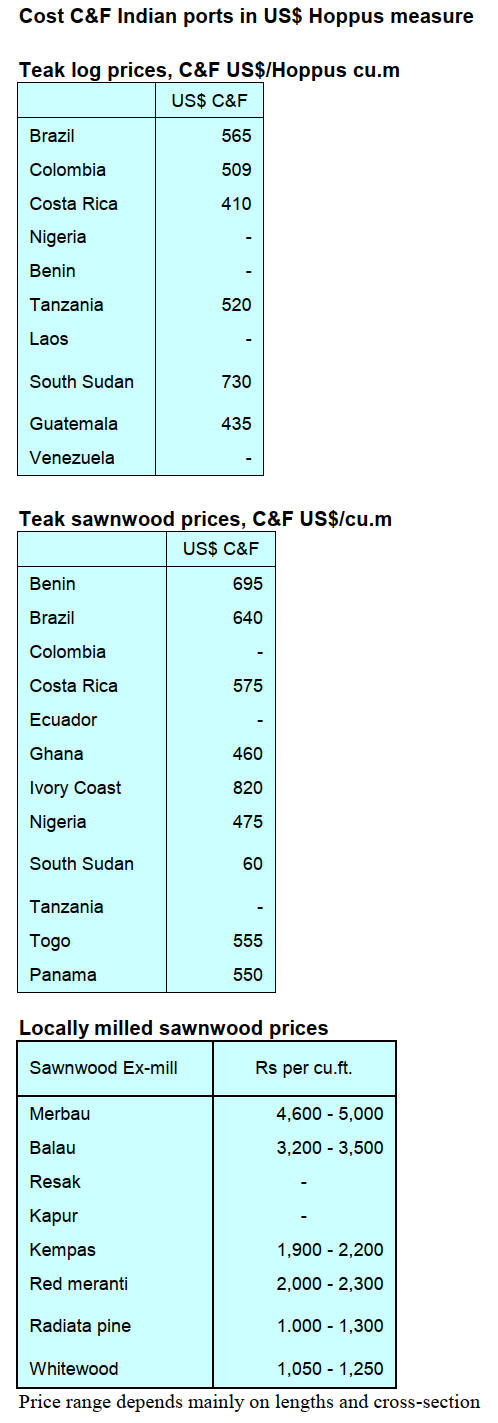 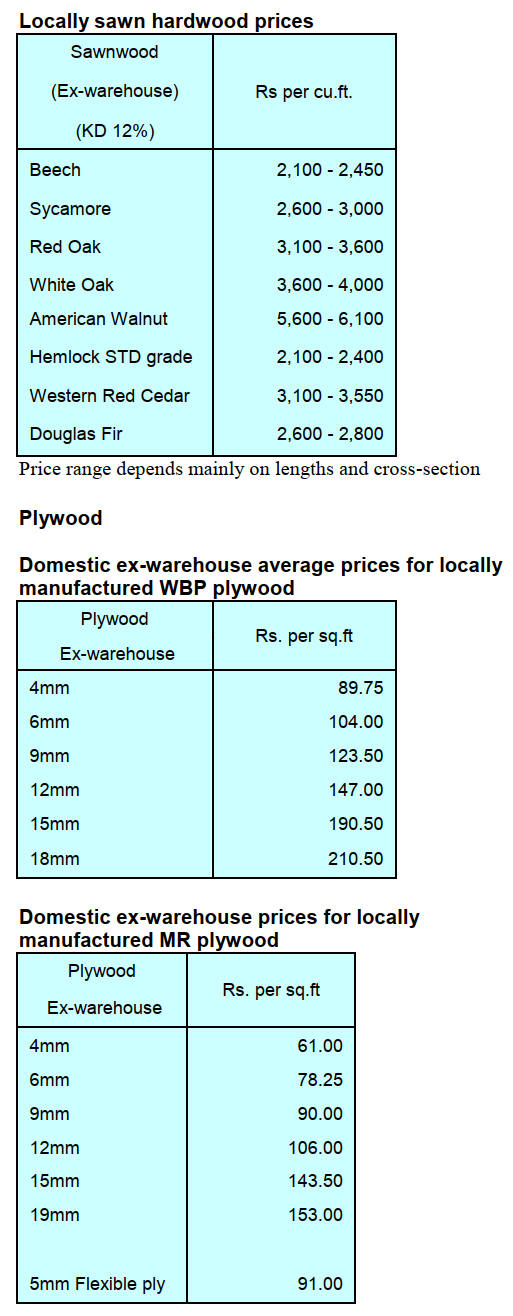
7.
VIETNAM
Wood and wood product (W&WP) trade
hightlights
According to statistics from the Vietnam Customs
Department, Vietnam’s W&WP exports in September
2026 have been estimated at US$1.47 billion, down 7%
from August 2026 but up 8% compared to September
2025. Of this total, WP exports are estimated at US$940
million, declining by 9% month-on-month and 1% year-
on-year.
During the first nine months of 2026, Vietnam’s total
W&WP exports are estimated at US$13.28 billion, an
increase of 6% compared with the same period in 2025.
WP exports are estimated at US$8.56 billion, representing
only a marginal year-on-year increase of less than 1%.
Vietnam imported 582,500 cu.m of logs and sawnwood in
August 2026, valued at US$209.9 million. This
represented a decline of 13% in volume and 11% in value
compared with July 2026. Compared with August 2025,
import volume decreased by 7.5%, while import value
increased by 5.5%.
During the first eight months of 2026, log and sawnwood
imports reached 4.9 million cu.m valued at US$1.7 billion,
up 7% in volume and 17% in value year-on-year. The
significantly faster growth in import value rather than in
volume indicates an upward trend in import prices.
Vietnam’s NTFP exports reached US$87.26 million in
August 2026, increasing by 2% compared with July 2026
and a substantial 32% compared with August 2025.
During the first eight months of 2026, exports of these
products totalled US$663.46 million, up 16% year-on-
year.
Vietnam’s exports of wood products to the US in
September 2026 have been estimated at US$780 million,
declining by 5% from August 2026 but increasing by 2%
compared with September 2025. During the first nine
months of 2026, Vietnam’s exports of timber and wood
products to the US are estimated at US$6.7 billion,
representing a year-on-year decline of 4%.
Acacia growers need safety net to produce higher
value logs
Longer harvest cycles mean delayed returns and greater
exposure to risks such as pests and storms. Speakers at a
Hanoi forum said smallholders will need financial
protection to change the growing cycle.
Speaking at a forum in Hanoi on sustainable acacia
plantations and high-value timber, Deputy Minister of
Agriculture and Environment Nguyễn Quốc Trị said the
industry needed to move from chasing volume to
improving value and efficiency across the whole supply
chain.
He said the forestry sector must stop prioritising the
expansion of acacia plantations and instead focus on
raising their productivity, quality and resilience, as
Vietnam seeks to improve returns for about 1.5 million
households that depend on the crop.
Acacia covers about 2.5 million hectares in Vietnam,
roughly 60% of the country's productive plantation forest
and about 70% of the world's estimated 3.5 million
hectares of the species. Over three decades, it has become
the backbone of the timber industry, supplying processors
and exporters and providing income for rural families,
most with small plots.
Yet the value it generates falls short of its potential. About
80% of acacia timber is used to make woodchips and
wood pellets, while the share of large logs destined for
furniture, processing and other premium segments remains
limited.
Trị said the ministry would put science and innovation at
the centre of efforts to make acacia more valuable.
Priorities include breeding and rolling out varieties with
higher yields, better wood quality and stronger resistance
to disease and extreme weather and refining methods for
growing large diameter timber. The ministry also plans to
expand technical support for small forest owners,
strengthen traceability and compliance with legal-timber
rules, promote sustainable forest management certification
and forge closer links between growers and processors.
Nguyễn Quốc Khanh, chairman of the Vietnam Timber
and Forest Product Association (VIFOREST), said the
country faces a paradox: abundant plantation resources but
too little value drawn from them. Households manage
about 80% of acacia land, he said, so the question is not
simply how to grow the trees but how to make each
hectare and each cubic metre of wood earn more,
sustainably.
Khanh argued that persuading growers to hold trees longer
to produce large timber will take more than appeals. "They
need an economic model attractive enough to justify the
wait," he said. He listed credit suited to long growing
cycles, forest insurance, long-term contracts between
companies and forest owners, certification, carbon
schemes and markets that pay a fair price for large timber.
VIFOREST proposed gradually building a 'Vietnamese
Acacia' brand, positioning the wood as a renewable,
responsibly managed material with clear origins.
See: https://vietnamnews.vn/society/1801571/acacia-growers-
need-long-term-incentives-to-produce-higher-value-timber.html
and
https://vietnamnet.vn/en/vietnam-has-world-s-largest-acacia-
plantations-yet-most-timber-goes-to-chips-2563007.html
and
https://van.nongnghiepmoitruong.vn/to-leverage-greater-acacia-
value-for-15-million-households-d835169.html
Wood industry urged to seek stronger foothold in
domestic market
While export markets have helped Vietnam’s wood
industry build its production capacity and establish a
global position, a stronger domestic market could provide
an important foundation for more stable and sustainable
long-term growth, industry representatives have said.
Speaking at a seminar on building a legal, quality-driven
and sustainable domestic wood market, Nguyễn Hoài Bảo,
vice chairman and general secretary of the Handicraft and
Wood Industry Association of HCM City (HAWA), said
that in 2025, Vietnam’s exports of wood and wood
products were worth US$17.2 billion, with exports to the
US accounting for nearly US$9.5 billion.
The figures demonstrate Vietnamese wood and furniture
enterprises possess robust manufacturing capabilities,
effective corporate governance and the ability to meet
strict requirements in high-standard international markets,
he said. But having developed the ability to take its
products to global markets, the industry should also focus
on building a sufficiently strong market at home, he said.
“With a population of more than 100 million, rapid
urbanisation and growing demand for housing,
construction and living spaces, the domestic market is a
fertile space that the wood industry needs to take seriously
and approach with a long-term strategy.
“However, sustainable development requires not only
good products but also clear standards on timber origin,
legality, quality and product safety.”
Echoing this view, Ngô Sỹ Hoài, secretary general of the
Vietnam Timber and Forest Products Association
(VIFOREST), said the country’s population of more than
100 million and growing by around 1% annually, offers
considerable potential for the domestic wood market.
For years, however, the domestic market had largely been
regarded as a supplementary sales channel or a “lifeline”
when exports faced difficulties, while most businesses
continued to focus their resources on overseas markets.
Hoài said: “This approach needs to change. The domestic
market is large enough to become a genuine growth driver,
rather than merely a supplementary sales channel.”
He said if the economy maintains steady growth of more
than 10 per cent annually, domestic demand for wood
products could expand by 7–9% annually, surpassing the
global average growth rate of around 6%. Then it could
grow from its current US$5 billion valuation to nearly
US$8 billion by 2030.
This domestic demand spans far beyond residential
furniture, encompassing housing, public works, hospitality
services, e-commerce packaging, paper, logistics and
biomass energy. Hoài particularly highlighted the
transformative potential of public procurement. If
government projects and public facilities strictly mandate
the use of legal, traceable timber sourced from sustainably
managed forests, the public sector could establish
benchmark standards for the broader consumer market.
The domestic wood and furniture market faces several
constraints, including fragmented supply chains and a lack
of common standards and transparent product information,
according to Hoài and businesses at the seminar. Market
data is another weakness.
While import and export statistics are relatively
comprehensive, information on the size, structure and
consumption trends of the domestic wood market remains
limited. This makes it difficult for businesses to forecast
demand or develop appropriate market strategies.
Businesses attending the seminar also pointed to the lack
of standards and technical regulations specifically
applicable to the domestic wood market, calling for clearer
Government frameworks to help protect consumers and
establish a more transparent market.
Competition is also intensifying as a large and diverse
range of Chinese products reaches Vietnamese consumers
through online sales and domestic distribution channels.
Vietnamese businesses therefore need to take a more
proactive approach to developing the domestic market,
said Nguyễn Vĩnh Nam, vice president of operations at
USofa.
He said this requires stronger collaboration among
relevant associations and organisations to create
opportunities for businesses to network, share best
practices and build partnerships. The Government should
also play a leading role by developing common standards
and establishing a transparent framework for product
quality and origin. This would help businesses improve
quality while giving consumers more information when
making purchasing decisions.
Hoài said a transparent market ecosystem based on clear
standards is needed. Legal timber, traceability and
sustainable forest management should become minimum
requirements not only for export products but also for the
domestic market. Businesses should also develop
dedicated models for the domestic market rather than treat
it as an outlet for surplus products.
Nguyễn Minh Cương, general director of Minh Long
Wood Joint Stock Company and chairman of the HAWA
Northern Club, said firms should make greater use of
Vietnam’s cultural identity and heritage when developing
products for domestic consumers, creating designs that
reflect local tastes and values.
Võ Quang Hà, chairman of the HCM City Structure
Architecture Wood Association (SAWA) and chairman of
Tavico Group, said: “We have the capacity to produce
high-quality products for demanding international
markets. The same standards should also be applied to
products serving Vietnamese consumers.”
See: https://vietnamnews.vn/economy/1801144/wood-industry-
urged-to-seek-stronger-foothold-in-domestic-market.html
In related news, Forest Trends, in collaboration with the
Handicraft & Wood Industry Association of Ho Chi Minh
City (HAWA) and the Vietnam Timber and Forest
Products Association (VIFOREST), organised a workshop
in Ho Chi Minh City on “Building a legal, quality and
sustainable domestic timber market”.
According to Ngo Sy Hoai, Secretary General of
VIFOREST, over the past 15 years, most discussions on
the timber industry’s mechanisms and policies have
centred on export markets, while the domestic market has
not received commensurate focus.
He noted that the growing mention of the domestic market
in industry discussions reflects a positive shift in
awareness of its role.
Nevertheless, he pointed out that the domestic market
currently lacks information on its scale, demand structure,
raw material sources, products, distribution systems and
modes of operation. Some enterprises have proactively
piloted market development models but links between
enterprises, associations and management agencies remain
insufficiently strong.
According to To Xuan Phuc, Director of the Forest Policy,
Trade and Finance Programme at Forest Trends,
developing the domestic timber market should proceed in
parallel along two directions: establishing policies and
standards and implementing practical models. Through
pilot schemes, the timber industry can supplement data
and accumulate experience, thereby shaping policies better
aligned with realities.
He emphasised that developing the domestic market is
intended not only to expand outlets for timber products but
also to create momentum for enterprises to better
understand domestic consumer needs, enhance product
value and move towards sustainable development.
See: https://en.nhandan.vn/workshop-highlights-need-for-
stronger-domestic-timber-market-in-viet-nam-post167284.html
8. BRAZIL
Acre State forest concession plan
The Brazilian Development Bank (BNDES) and the State
government of Acre have signed an agreement on the
structure of forest concessions for the Mogno, Rio
Gregório and Rio Liberdade State Forests which cover
213,000 hectares of native forest designated for
sustainable forest management.
Located in the municipality of Tarauacá, the areas will be
subject to studies to assess the feasibility of concessions
that combine legal timber production with biodiversity
conservation and the protection of the Amazon.
The initiative aims to promote sustainable development in
the Amazon by keeping the forest intack, encouraging
sustainable production and generating economic, social
and environmental benefits. Sustainable forest
management involves low-impact harvesting techniques
that help preserve biodiversity and maintain the forest's
productive capacity.
The project includes studies on forest resources, logistics,
economic and financial feasibility and legal aspects as
well as the preparation of draft concession tender
documents. The studies and documents are expected to be
made available for public consultation in 2027.
See: https://agenciadenoticias.bndes.gov.br/noticia/BNDES-e-
estado-do-Acre-assinam-contrato-para-estruturar-concessoes-
de-florestas-estaduais
Container shipping and port logistics challenges
ABIMCI (Brazilian Association of Mechanically
Processed Timber Industry) participated in a panel on
“Maritime Shipping: Container Logistics and Maritime
Law”, held during the National Enforcement Meeting
(ENAFIS 2026), organised by the National Waterway
Transportation Agency (ANTAQ).
During the event, ABIMCI outlined the main challenges
faced by users of maritime shipping services, particularly
vessel calls omitted from port rotations, booking
postponements and rollovers, as well as detention and
demurrage charges and their impact on costs, operational
predictability and the commercial commitments of
exporting companies.
One point of consensus was the need to reduce unify
information across the maritime logistics chain, improve
transparency and legal certainty and standardise the risk
allocation matrix by establishing clearer criteria to reduce
uncertainty and disputes.
ANTAQ acknowledged the value of feedback from users
in the timber sector in improving its regulatory oversight
and emphasised that cargo blockages and restrictions on
cargo shipments are treated as top priorities.
Given the sector´s regular use of major container
terminals, particularly in Brazil’s Southern Region,
ABIMCI stressed the importance of monitoring terminal
operating conditions and the availability of port services. It
also highlighted the need for a long-term approach to
expanding existing port infrastructure and investing in
additional capacity to meet foreign trade demand to
strengthen the competitiveness of Brazil´s timber exports.
See: https://abimci.com.br/abimci-participa-de-debate-da-antaq-
sobre-logistica-de-conteineres/
Streamlining timber exports through Cuiabá
Representatives of the Center of Timber Producing and
Exporting Industries of the State of Mato Grosso
(CIPEM), the National Forum for Forest Based Activities
(FNBF), IBAMA and the Cuiabá Dry Port have advanced
discussions on using the capital’s facilities for procedures
related to the export of forest products. The initiative aims
to reduce dependence on the ports of Paranaguá (Paraná
state), Itajaí (Santa Catarina state) and Santos (São Paulo
state).
According to CIPEM, one of the main benefits would be
the ability to identify and resolve potential issues while
shipments are still in Mato Grosso. Conducting these
procedures in Cuiabá could also reduce delays, storage
costs and expenses associated with the possible return of
shipments to their municipality of origin.
The discussions cover products made from species listed
under the Convention on International Trade in
Endangered Species of Wild Fauna and Flora (CITES) and
products from other species subject to export
requirements.
The objective is to make export procedures more efficient,
reduce logistics costs and improve predictability for
companies in Mato Grosso operating in international
markets.
See: https://cipem.org.br/cipem-e-ibama-avancam-em-
alternativa-para-agilizar-exportacoes-de-madeira-por-cuiaba/
Progress in forest restoration
The FAO’s State of the World’s Forests 2026 report
highlights two examples of forest restoration in Brazil.
The first is an initiative led by the Xukuru Indigenous
people in Pernambuco State, who have restored 91.7
hectares in the Ororubá Mountains, in the Caatinga biome,
based on biocentric restoration and ancestral knowledge.
The actions include rebuilding rock formations and
installing barriers to reduce water runoff and retain
sediment, thereby promoting natural regeneration and the
return of fauna, flora and water sources.
The second project is the Tri-national Atlantic Forest Pact
which brings together Argentina, Brazil and Paraguay to
restore a biome that retains less than 30% of its original
forest cover. The initiative promotes participatory
governance and the creation of “multifunctional
landscapes”, integrating ecosystem restoration with
productive activities, food security and rural development.
Monitoring uses satellite imagery and cloud computing to
track changes in land cover and land use.
The report also highlights Brazilian legislation related to
native vegetation recovery, including Law No.
12,651/2012 and the National Policy for the Recovery of
Native Vegetation, which aims to restore 12 million
hectares by 2030.
Globally, an estimated 489 million hectares of forest were
lost between 1990 and 2025, while more than 460 million
hectares remain degraded. According to the FAO,
restoring more than 1 billion hectares of degraded land
could generate US$1.8 trillion in annual benefits as well as
gains in biodiversity, water regulation and soil quality.
See: https://news.un.org/pt/story/2026/09/1854462
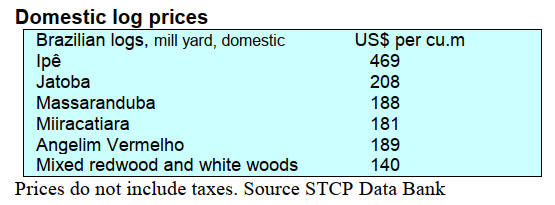
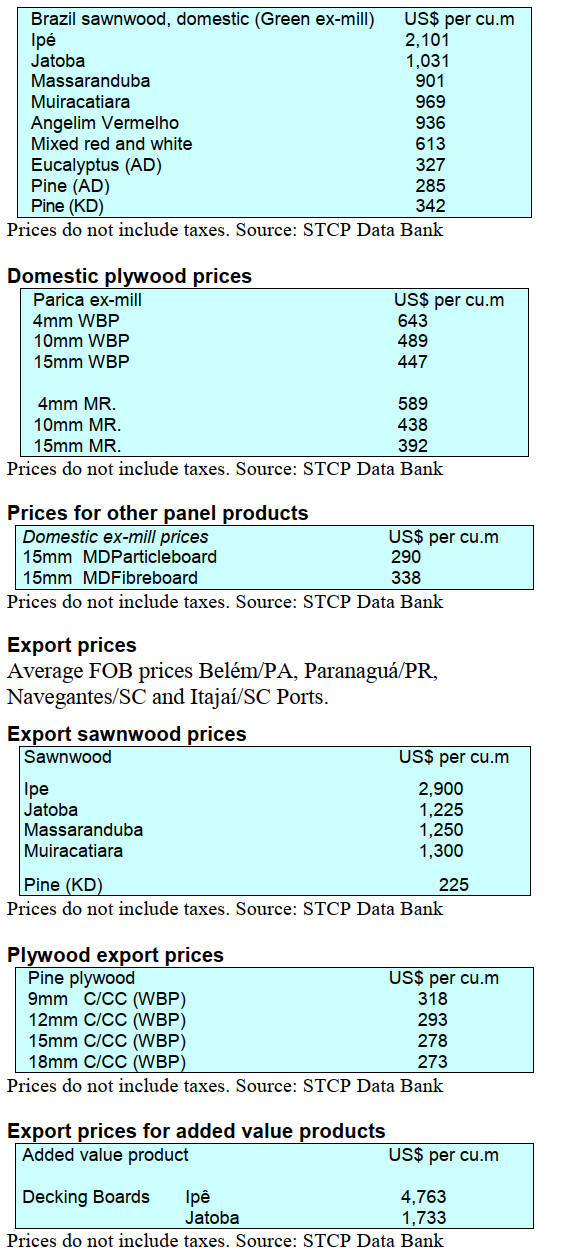
9. PERU
Participation in the FAO Committee
on Forestry
The National Forest and Wildlife Service (Serfor)
participated in the 28th session of the Food and
Agriculture Organization of the United Nations (FAO)
Committee on Forestry (COFO 28), held from September
28 to October 2, 2026, in Rome, Italy. At this international
gathering which brought together representatives from 128
countries, Peru formally presented its bid to host the XVI
World Forestry Congress in 2028.
Additionally, Peru promoted a joint declaration at COFO
28 on behalf of the eight member countries of the Amazon
Cooperation Treaty Organization (ACTO) to place the
conservation and sustainable management of Amazonian
forests on the international agenda.
This regional coordination took place while Peru, through
Serfor, held the Pro Tempore Presidency of the
Amazonian Network of Forestry Authorities (RAFO). The
declaration incorporated contributions from all eight
Amazonian countries and was agreed upon by consensus.
During its interventions, Peru highlighted the restoration
of degraded forest lands and the promotion of the bio-
economy, while emphasising the importance of integrated
fire management, including forest fire prevention.
See: https://www.gob.pe/institucion/serfor/noticias/1452930-
midagri-participa-en-comite-forestal-de-la-fao-y-promueve-
atencion-sobre-los-bosques-amazonicos
Exports of furniture and parts steady
According to data from the Services and Extractive
Industries Division of ADEX, exports of furniture and
furniture parts reached US$2.5 million (FOB) between
January and July 2026, a 0.4% increase compared to the
same period the previous year.
The United States led imports, accounting for 65% of the
total exported value and recording a 7% year on year
increase. Italy ranked second with a 10% share and 3%
growth.
Bolivia took third place with a 5% share. Puerto Rico
ranked fourth with a 5% share and Chile rounded out the
top five destinations, accounting for 4% of exports and
showing 3% growth compared to July 2025.
US$26 million in funding for sustainable forest
management
The National Forest and Wildlife Service (SERFOR) has
facilitated a combined total of over US$26.8 million in
funding for 18 departments to date through various
sectoral projects and programme s aimed at consolidating
sustainable forest management, promoting forestry
businesses and strengthening production chains.
In this context, the Forest Incentives Program (PIF) has
disbursed US$12 million in investments, incentives and
technical assistance to strengthen forest plantations. This
has indirectly benefited more than 19,000 individuals from
10,000 rural families, belonging to one hundred
communities, organisations and micro, small and medium-
sized enterprises.
The initiative has resulted in 3.5 million trees planted for
commercial purposes, representing approximately 3,100
hectares of new forest plantations.
Under its forestry component the PIF plans to invest
approximately US$8 million in additional funds to co-
finance forestry businesses run by at least 39 producer
organisations across the Departments of Loreto, Ucayali,
Junín, Pasco, and Madre de Dios, thereby promoting
sustainable economic activities across more than 740,000
hectares of forest.
See: https://www.gob.pe/institucion/serfor/noticias/1454785-
serfor-impulsa-financiamiento-por-mas-de-s-92-mlls-para-
manejo-sostenible-del-bosque-y-cadenas-productivas-en-18-
departamentos
Standardised specifications for wooden posts and
pallets
With the aim of promoting sustainable public procurement
the National Forest and Wildlife Service (SERFOR) has
successfully updated the standardised specifications for
roundwood posts used in perimeter fencing and for
double-deck, four-way entry wooden pallets (measuring
1.20 m x 1.00 m x 0.145 m).
This initiative will benefit producers in Amazonian
communities and ensures product consistency. This
initiative will help diversify markets for Amazonian
producers and create more transparent, competitive
conditions for product sales, thereby boosting the income
of families involved in forestry activities.
See: https://www.gob.pe/institucion/serfor/noticias/1449144-
serfor-modifico-las-fichas-de-homologacion-de-postes-y-
parihuelas-de-madera-para-compras-publicas-sostenibles
 |